Skip to content
When planning an electronics project, unexpected PCB assembly costs can derail your budget. Many engineers and product developers find themselves scrambling when quotes come back at 2-3 times their estimates, threatening project timelines and profitability.
PCB assembly costs typically range from $10-$50 per board for low volumes (10-100 units) of simple designs, down to $1-$5 per board for higher volumes (1000+ units). Complexity, component types, testing requirements, and order quantity significantly impact pricing.
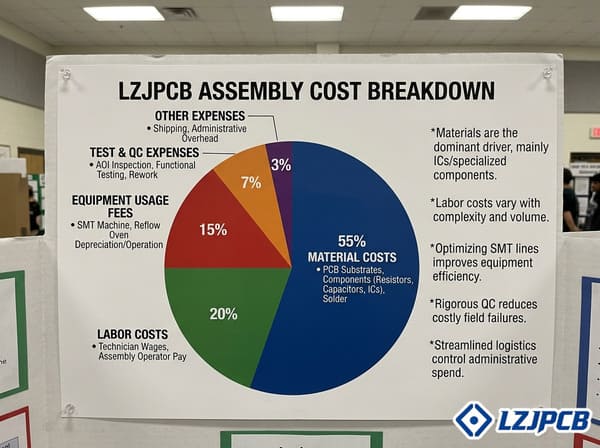
Understanding PCB assembly costs is crucial for accurate project budgeting and manufacturer selection. In my years overseeing production at LZJPCB, I’ve helped hundreds of clients optimize their designs for cost effectiveness without sacrificing quality. The pricing structure for PCB assembly involves multiple variables, and knowing how these factors interact can help you avoid costly surprises and make informed decisions about your electronics manufacturing.
How Expensive Are PCB Boards?
The wide range of PCB pricing1 can be confusing. Without understanding the key cost drivers, you might end up paying far more than necessary or compromising quality to meet budget constraints.
Bare PCB boards typically cost $2-$5 per square inch for 2 layer boards in low volumes, $3-$10 for 4 layer boards, and $20+ for boards with 8+ layers. Board material, size, layer count, copper weight, surface finish, and quantity dramatically impact pricing.
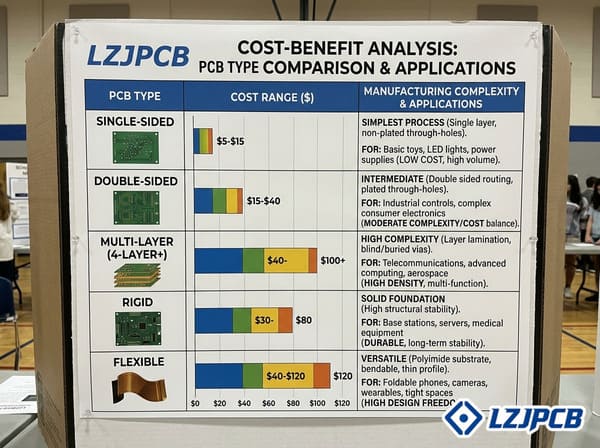
The cost of PCB boards is just one component of the total assembly cost, but it’s an important starting point. I remember working with a startup that initially selected an 8 layer board for a fairly simple IoT device. By redesigning to a 4 layer board, we cut their PCB costs by over 60% without compromising functionality. Understanding what drives PCB pricing1 can lead to similar savings for your projects.
Key Factors That Influence PCB Board Pricing
PCB pricing1 involves numerous variables that interact in complex ways. Having overseen thousands of PCB projects, I’ve identified the most significant cost drivers and how they affect overall pricing.
| Factor | Description | Cost Impact | Cost Optimization Tips |
|---|---|---|---|
| Layer Count2 | Number of copper layers in the PCB | Higher layer count = exponentially higher cost | Use the minimum layers needed for functionality |
| Board Size3 | Physical dimensions of the PCB | Larger area = higher cost (roughly linear) | Optimize layout to minimize unused space |
| Material4 | Base substrate (FR4, Rogers, aluminum, etc.) | Special materials can increase cost 2-10X | Use standard FR4 unless performance requires alternatives |
| Quantity | Number of boards ordered | Higher quantity = lower per unit cost | Consolidate orders when possible |
| Copper Weight | Thickness of copper layers | Heavier copper = higher cost | Use standard 1oz unless current requirements dictate otherwise |
| Surface Finish5 | Final coating (HASL, ENIG, Immersion Silver, etc.) | ENIG costs 2-3X more than HASL | Select finish based on actual requirements |
| Minimum Trace/Space | Smallest gap between traces or width of traces | Finer traces/spaces = higher cost | Design with standard manufacturing capabilities in mind |
| Mechanical Features6 | Cutouts, scored areas, chamfered edges | More complex features = higher cost | Simplify mechanical design where possible |
| Special Requirements7 | Impedance control, tight tolerances | Special requirements add significant cost | Specify only necessary requirements |
Layer count is typically the most significant cost driver for PCBs. Moving from a 2 layer to a 4 layer board might increase costs by 50-100%, while moving from 4 to 8 layers could double or triple the price. This exponential cost increase occurs because each additional layer requires more materials, processing steps, and has higher reject rates during manufacturing.
Board material selection also dramatically impacts pricing. Standard FR4 is the most economical choice for most applications, but specialized boards might require materials like Rogers (for high frequency applications) or metal core boards (for enhanced thermal performance). These specialty materials can cost 3-10 times more than standard FR4, so they should only be used when absolutely necessary.
Surface finish selection represents another significant cost variable. HASL (Hot Air Solder Leveling) is typically the most economical option, while ENIG (Electroless Nickel Immersion Gold) provides better flatness and longer shelf life but at 2-3 times the cost. Immersion silver and OSP (Organic Solderability Preservative) fall somewhere in between in terms of cost.
Manufacturing complexity factors like via structures also impact pricing. Through hole vias are the most economical, while blind and buried vias significantly increase manufacturing costs. Similarly, tighter tolerances for trace width and spacing increase costs as they require more precise manufacturing processes and have higher rejection rates.
Quantity discounts8 are substantial in PCB manufacturing. The price per board might drop by 50-70% when moving from 10 pieces to 100 pieces, and another 30-50% when moving from 100 to 1,000 pieces. This is because the setup costs (engineering review, tooling, etc.) are spread across more units.
When considering PCB costs, it’s also important to account for panelization, combining multiple individual boards into a single panel for more efficient manufacturing. This can significantly reduce costs for small boards, as the setup costs are shared across all boards in the panel.
How Much Does It Typically Cost For Low Volume PCB Assembly?
Many engineers and product developers are shocked by the high per unit costs of low volume assembly. Without proper planning, setup fees9 and minimum order quantities can make small runs prohibitively expensive.
Low volume PCB assembly (10-100 units) typically costs $10-$50 per board plus setup fees of $150-$500, depending on design complexity. Major cost factors include setup fees, component procurement, assembly labor, and testing requirements.
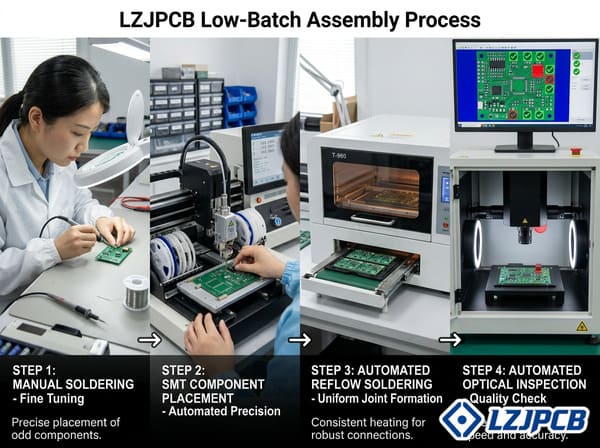
Low volume assembly presents unique challenges and cost structures. At LZJPCB, we’ve developed specialized processes for prototype and small batch production that help manage these costs. I’ve worked with numerous startups and R&D teams to optimize their designs for cost effective low volume manufacturing while maintaining the flexibility needed during product development phases.
Understanding Low Volume Assembly Costs
The economics of low volume PCB assembly differ significantly from mass production. Setup costs that would be negligible per unit in large runs become major factors in small batches. Understanding these dynamics can help you budget more accurately and select the right manufacturing partner.
| Cost Component | Description | Typical Cost Range | Cost Optimization Strategies |
|---|---|---|---|
| Setup Fees | One-time charges for programming, stencil creation, etc. | $150-$500 per design | Minimize design revisions, use standard components |
| Component Procurement | Sourcing and managing parts | 40-60% of total assembly cost | Use common components, provide longer lead times |
| Assembly Labor | Manual and machine time for assembly | $30-$75 per hour | Design for automated assembly where possible |
| Testing | Functional and visual inspection | $25-$100 per board | Define critical tests only, develop reusable test fixtures |
| NRE Charges10 | Non recurring engineering costs | $100-$1,000 depending on complexity | Finalize design before submission, minimize special requirements |
| Minimum Order Fees11 | Charges to cover minimum run sizes | Varies by manufacturer | Batch multiple projects together when possible |
| Rush Charges12 | Expedited processing fees | 30-100% premium | Plan ahead to avoid rush requirements |
Setup fees are often the most significant hurdle for low volume production. These include programming pick and place machines, creating solder paste stencils, and establishing test procedures. At LZJPCB, we’ve optimized our setup processes to minimize these costs for small runs, but they still represent a substantial portion of the total for orders under 50 units.
Component procurement for low volumes presents another major challenge. While large scale manufacturers can negotiate volume discounts and maintain extensive component inventories, small runs often require purchasing components at higher per unit prices. Additionally, minimum order quantities from suppliers might require purchasing far more components than needed for a small production run.
For very low volumes (under 50 units), manual or semi automated assembly processes are often more economical than fully automated lines. This is because the setup time for automated equipment becomes prohibitively expensive per unit. However, manual assembly introduces variability and potential quality issues, particularly for boards with fine pitch components or BGA packages.
Testing costs can be significant for low volumes, as the development of test fixtures and procedures must be amortized across fewer units. For prototypes and small runs, we typically recommend focusing on critical functional tests rather than comprehensive test coverage to manage costs effectively.
Design stability is particularly important for cost control in low volume production. Each design change requires new setup procedures, potentially new component procurement13, and revised testing protocols. I’ve seen cases where multiple minor revisions doubled the effective cost per unit compared to a stable design produced in a single batch.
To manage low volume assembly costs effectively, consider these strategies:
- Consolidate orders when possible to share setup costs across multiple boards
- Use common components with good availability rather than exotic parts
- Design with manufacturing in mind to minimize manual intervention
- Provide adequate lead time to avoid rush charges and allow for efficient component sourcing
- Consider semi turnkey options (you provide some or all components) for very small runs
Where Can I Find Affordable PCB Assembly With Quick Turnaround?
Finding reliable PCB assembly services that offer both reasonable pricing and fast delivery can seem impossible. Many manufacturers either charge premium prices for expedited service or offer low prices but with extended lead times.
Affordable PCB assembly with quick turnaround is available through specialized prototype assembly houses, online PCB services with integrated assembly capabilities, and select Asian manufacturers with optimized small batch processes. Expect to pay $20-$100 per board for 5-10 day turnaround on simple designs.
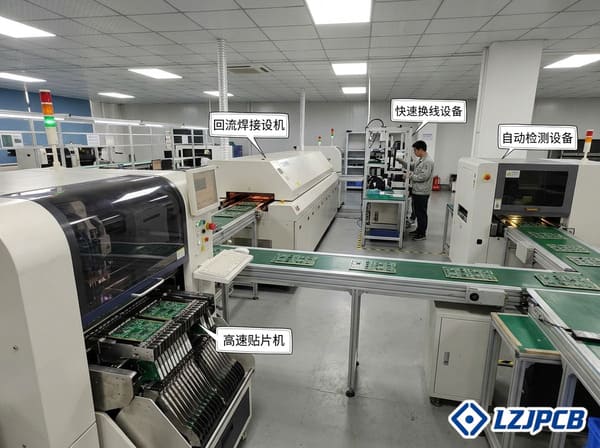
The PCB assembly landscape has evolved significantly in recent years, with many providers now offering specialized services for quick turn, low volume production. At LZJPCB, we’ve developed streamlined processes that allow us to offer 5-day standard turnaround even for small batches. This balance of speed, quality, and cost requires specialized equipment and workflows that not all manufacturers can provide.
Finding the Right Quick Turn PCB Assembly Partner
The right manufacturing partner for quick turn PCB assembly depends on your specific requirements, budget constraints, and quality expectations. Based on my experience managing rush projects for clients across multiple industries, I can recommend several approaches to finding the right balance.
| Provider Type | Typical Turnaround | Price Range (10 simple boards) | Advantages | Limitations |
|---|---|---|---|---|
| Online PCB Services | 1-3 weeks | $300-$1,000 | Easy ordering, transparent pricing | Limited design complexity, restricted component selection |
| Local Assembly Houses14 | 1-2 weeks | $500-$2,000 | Direct communication, flexible process | Higher costs, limited capacity |
| Asian Manufacturers | 1-3 weeks | $200-$800 | Lower costs, various capabilities | Communication challenges, shipping delays |
| Specialized Prototype Services | 24-72 hours | $1,000-$3,000 | Extremely fast turnaround | Premium pricing, limited volume capability |
| Hybrid Services (LZJPCB)15 | 5-10 days | $300-$900 | Balance of cost and speed, design support | May require minimum order values |
Online PCB assembly services have revolutionized quick turn manufacturing by streamlining the quoting and ordering process. Platforms like PCBWay, JLCPCB, and Seeed Studio offer integrated PCB fabrication and assembly services with straightforward pricing models. These services are ideal for simple to moderately complex designs with standard components. However, they may have limitations for advanced designs or unusual component requirements.
Local assembly houses in North America and Europe often provide excellent communication and flexibility but at higher price points. They’re particularly valuable for projects requiring close collaboration, complex designs, or unusual manufacturing requirements. The premium pricing typically reflects higher labor costs and overhead compared to overseas manufacturers.
Asian manufacturers16 like those in China’s electronics manufacturing hubs often offer the best combination of cost and capabilities for standard projects. Companies like LZJPCB have developed efficient processes specifically for handling international orders with quick turnaround times. The main challenges involve communication across time zones and international shipping times, though these have been minimized with improved logistics and online project management systems.
For extremely urgent projects, specialized prototype assembly services can deliver completed boards in as little as 24-48 hours, but at premium prices that may be 3-5 times higher than standard services. These are typically used only for critical development milestones or emergency replacements.
When selecting a quick turn assembly partner, consider these factors beyond just price and turnaround time:
- Component sourcing capabilities and inventory
- Quality control processes and standards compliance
- Communication systems and response times
- Design for Manufacturing (DFM) review services17
- Testing capabilities and documentation
- Past performance with similar projects
At LZJPCB, we’ve found that providing comprehensive DFM review before production is crucial for achieving quick turnaround without quality issues. Nearly 40% of the rush projects we receive have design issues that would cause failures if not addressed before production. A good assembly partner should identify and help resolve these issues quickly to maintain both speed and quality.
For the most time critical projects, consider a phased approach: produce a minimal viable quantity with the fastest service option to meet immediate needs, then follow with a larger batch using standard turnaround times. This approach optimizes both time and cost while ensuring continuity for your project.
Conclusion
PCB assembly costs vary widely based on complexity, volume, components, and turnaround requirements. Understanding these factors helps you budget accurately and choose the right manufacturing partner. With proper planning and design optimization, you can achieve the best balance of cost, quality, and delivery for your specific project needs.
-
Understanding PCB pricing can help you make informed decisions and save costs on your projects. ↩ ↩ ↩
-
Explore how layer count impacts pricing to optimize your PCB design and budget. ↩
-
Learn how optimizing board size can lead to significant cost savings in PCB manufacturing. ↩
-
Discover the best materials for your PCB needs and how they affect overall costs. ↩
-
Understanding surface finishes can help you choose the right option for performance and cost. ↩
-
Learn how simplifying mechanical features can help you save on manufacturing costs. ↩
-
Understanding special requirements can help you avoid unnecessary expenses in your PCB projects. ↩
-
Find out how ordering in bulk can drastically reduce your PCB costs. ↩
-
Exploring setup fees will clarify their impact on overall production costs, helping you plan better. ↩
-
Understanding NRE charges can help you avoid unexpected costs during the design phase. ↩
-
Learn about minimum order fees to better navigate supplier negotiations and costs. ↩
-
Understanding rush charges can help you plan ahead and save on expedited processing fees. ↩
-
Learn about component procurement to optimize sourcing strategies and reduce expenses. ↩
-
Understand the advantages of local assembly houses for better communication and flexibility. ↩
-
Explore how hybrid services can provide a balance of cost and speed for PCB assembly. ↩
-
Discover the benefits of choosing Asian manufacturers for cost effective PCB solutions. ↩
-
Learn how DFM review services can enhance the quality and efficiency of PCB production. ↩