

Navigating the world of electronics manufacturing can feel like learning a foreign language. Terms like "PCB assembler" are tossed around casually by industry insiders, leaving newcomers confused about who does what in the complex process of creating electronic devices.
A PCB assembler is a person or company that places electronic components onto bare printed circuit boards and permanently attaches them through soldering. They transform unpopulated boards into functional electronic assemblies through component placement, soldering, inspection, and testing processes.
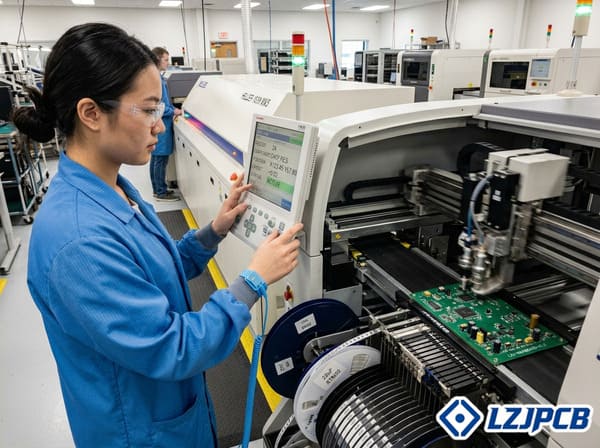
The role of a PCB assembler is crucial in electronics manufacturing. As someone who has managed PCB assembly operations for over a decade, I’ve seen firsthand how the quality of assembly directly impacts the functionality, reliability, and lifespan of electronic products. Whether you’re looking to outsource your assembly needs or considering starting your own assembly operation, understanding what PCB assemblers do and how they operate is essential knowledge in today’s electronics driven world.
How to Start a PCB Assembly Business?
Starting a PCB assembly business1 seems deceptively simple at first glance. Many entrepreneurs underestimate the technical expertise, equipment investment2, and industry connections required, leading to costly false starts and business failures.
To start a PCB assembly business, develop a detailed business plan, secure adequate funding (typically $100,000-$500,000 minimum), acquire essential equipment, establish a suitable facility with ESD protection, hire skilled technicians, build supplier relationships, obtain necessary certifications, and develop quality control processes.
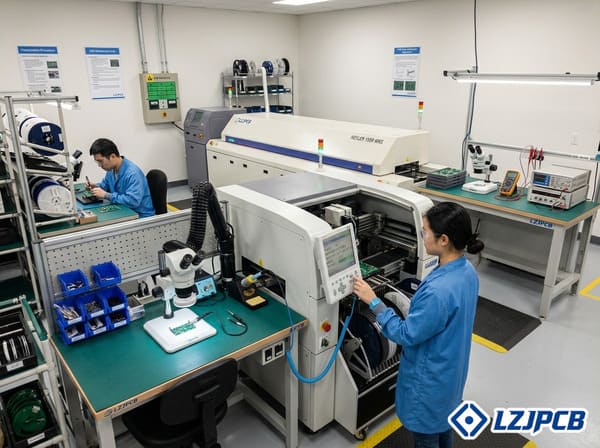
I remember when I first considered entering the PCB assembly business1. The learning curve was steep, and the initial investment was substantial. However, with careful planning and execution, it’s possible to build a successful operation that serves a specific market niche. The key is understanding that PCB assembly is both a technical and a business challenge that requires expertise in both domains.
Creating a Viable PCB Assembly Business
Starting a PCB assembly business1 involves much more than just purchasing equipment and finding customers. Success requires careful market positioning3, technical expertise, and solid business fundamentals. I’ve consulted with several startups in this space, and those that succeed typically follow a structured approach.
| Business Aspect | Key Considerations | Common Pitfalls |
|---|---|---|
| Market Research | Identify target customers, competition, pricing standards | Targeting oversaturated markets, underestimating competition |
| Business Model | Determine services offered (prototyping, production, turnkey) | Trying to serve all markets without adequate resources |
| Capital Requirements | Equipment costs, facility setup, working capital, contingency funds | Undercapitalization, overlooking ongoing costs |
| Facility Setup | Space requirements, electrical needs, environmental controls4, ESD protection | Inadequate space planning, poor workflow design |
| Equipment Acquisition | New vs. used, capacity needs, maintenance requirements | Buying inappropriate equipment, underestimating maintenance costs |
| Staffing | Technical expertise needed, training requirements, labor costs | Hiring underqualified staff, inadequate training |
| Supply Chain | Component suppliers, PCB fabricators, consumables vendors | Poor supplier relationships5, inadequate inventory management |
| Quality Systems | Inspection processes, testing capabilities, documentation | Inadequate quality controls, poor traceability |
| Marketing Strategy | Online presence, industry networking, customer acquisition | Insufficient marketing, poor differentiation from competitors |
One of the most critical decisions is your market positioning3. At LZJPCB, we initially focused on serving small to medium sized businesses that were underserved by larger manufacturers. This allowed us to build a loyal customer base before expanding into more competitive segments. I recommend that new assembly businesses identify a specific niche where they can provide exceptional value, perhaps quick turn prototyping, specialized assembly techniques, or serving a particular industry vertical.
Facility setup is another crucial consideration. PCB assembly requires controlled conditions, appropriate temperature and humidity control, ESD (electrostatic discharge) protection, adequate lighting, and proper ventilation. I’ve seen startups attempt to operate from inadequate spaces, only to face quality issues that damaged their reputation. Plan your facility carefully, with attention to workflow efficiency and environmental controls4.
Equipment selection should align with your business model. If you’re focusing on prototype and small batch production, flexibility is key. For higher, volume production, throughput becomes more important. Used equipment can significantly reduce initial investment costs, but requires careful evaluation of condition and remaining service life. I generally recommend that new businesses start with reliable used equipment and upgrade as they establish themselves in the market.
Quality systems are non negotiable in PCB assembly. Even a small operation needs defined processes for incoming inspection, in process quality checks, and final testing. Documentation is equally important, customers will expect evidence that their assemblies meet specifications. Developing these systems before you start production will prevent quality issues that could damage your reputation.
Finally, don’t underestimate the importance of industry relationships. PCB assembly businesses rely on a network of suppliers for boards, components, and consumables. Building strong relationships with these suppliers can help you secure better pricing, priority service, and technical support. Similarly, relationships with potential customers often begin long before the first order is placed. Industry networking, both online and at trade events, should be a priority from day one.
What Equipment is Necessary for a Small Scale PCB Assembly Setup?
Setting up even a basic PCB assembly operation requires specialized equipment that many newcomers aren’t familiar with. Without guidance, it’s easy to waste money on unnecessary tools or skimp on essential items that affect quality.
Essential equipment for a small scale PCB assembly setup includes a stencil printer for solder paste application, a pick and place machine for component placement, a reflow oven for soldering surface mount components, a soldering station for manual work, an inspection system, and testing equipment.
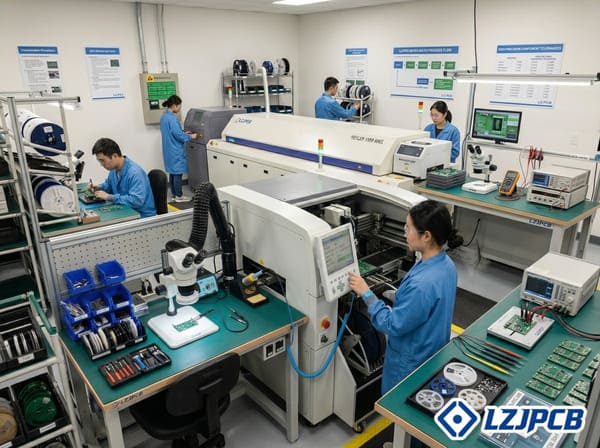
When I helped set up our first assembly line at LZJPCB, we had to make careful decisions about equipment investment. Starting with the right core equipment allowed us to produce quality assemblies while managing our initial costs. Over time, we added more automated and specialized equipment as our business grew and diversified.
Essential Equipment for Starting PCB Assembly Operations
The equipment you select will directly impact your production capabilities, quality levels, and operational costs. I’ve found that starting with good quality core equipment and adding specialized tools as needed is generally the most cost effective approach for new assembly operations.
| Equipment Category | Purpose | Entry Level Options | Cost Range (USD) | Considerations |
|---|---|---|---|---|
| Solder Paste Application | Applies solder paste to PCB pads | Manual stencil printer, semi automatic printer | $500 – $15,000 | Alignment accuracy, ease of use, stencil frame compatibility |
| Component Placement | Places components on the PCB | Manual pick and place tools, entry level automated pick and place | $2,000 – $50,000 | Placement accuracy, component range, ease of programming |
| Reflow Soldering | Melts solder to form connections | Bench top reflow oven, converted toaster oven | $1,000 – $15,000 | Temperature control, profile programming, working area |
| Manual Soldering | Hand soldering, rework, repairs | Soldering station, hot air rework station | $500 – $3,000 | Temperature control, tip options, ESD safety |
| Inspection | Quality control | Illuminated magnifier, digital microscope, entry level AOI | $200 – $20,000 | Magnification, image capture, inspection area |
| Testing | Verifies functionality | Multimeter, power supply, custom test fixtures6 | $500 – $5,000+ | Measurement accuracy, test coverage |
| Support Equipment | Assists assembly process | ESD safe workbenches7, fume extraction8, storage | $2,000 – $10,000 | Workspace design, safety features, organization |
For solder paste application, entry level operations can start with a manual stencil printer. These provide basic alignment features and even paste distribution at a relatively low cost. As production volumes increase, semi automatic printers offer better consistency and faster operation. The key factors are alignment accuracy and frame compatibility, ensure your printer can accommodate the stencil frame sizes you’ll be using.
Component placement represents one of the most significant equipment decisions. For very small operations, manual pick and place tools with vacuum pickup can be sufficient. However, even entry level automated pick and place machines dramatically improve accuracy and speed. These machines typically cost $5,000-$50,000 depending on capabilities, and represent a significant productivity upgrade over manual placement. Look for machines that are easy to program and can handle your expected component range.
Reflow soldering requires precise temperature control to produce reliable solder joints. Budget options include modified toaster ovens with added controllers, but these have significant limitations in profile control and consistency. Purpose built bench top reflow ovens start around $1,000-$2,000 and provide programmable profiles, better temperature uniformity, and more reliable operation. Key considerations include the maximum board size the oven can accommodate and the granularity of temperature control.
Manual soldering equipment remains essential even in automated setups. A good quality temperature controlled soldering station is necessary for through hole components, rework, and repairs. Look for stations with digital temperature control, quick change tips, and ESD safety features. Adding a hot air station expands your capabilities to include surface mount rework and BGA handling.
Inspection equipment should match your quality requirements and component sizes. At minimum, a good illuminated magnifier or digital microscope is essential for visual inspection of solder joints. As capabilities grow, entry level Automated Optical Inspection (AOI) systems can dramatically improve detection of soldering defects and component placement issues.
Testing equipment requirements vary widely based on the products being assembled. Basic requirements include multimeters, power supplies, and any product specific test equipment. Many operations develop custom test fixtures6 that verify basic functionality of their assemblies. This area often evolves significantly as production matures and quality requirements increase.
Don’t overlook support equipment like ESD safe workbenches7, fume extraction8 systems, and component storage. These items directly impact workplace safety, component protection, and operational efficiency. Proper ESD protection is particularly critical, even a small static discharge can damage sensitive electronic components.
What Are the Leading PCB Assembly Equipment Brands for Home Use?
The market for hobby level PCB assembly equipment9 is flooded with options, making it difficult to separate quality tools from unreliable knockoffs. Making the wrong choice leads to wasted money and frustrating results that can kill enthusiasm for electronics projects.
Leading PCB assembly equipment brands for home use include: ChipQuik and MG Chemicals for solder paste and flux; Hakko, Weller, and JBC for soldering stations; T-962A and AOYUE for reflow ovens; ProtoPlace and TM-240A for manual pick and place; and Andonstar and AmScope for inspection microscopes.
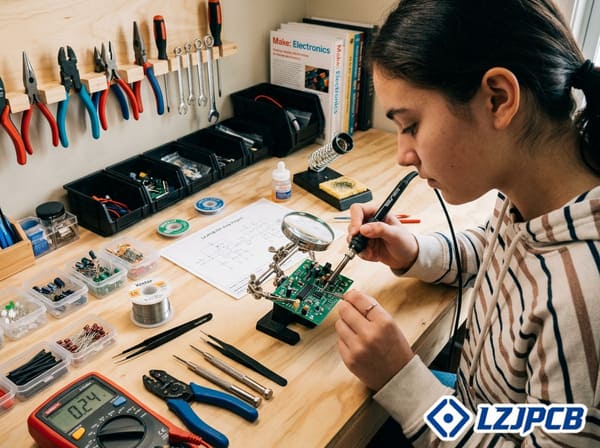
I started my electronics journey as a hobbyist long before entering the professional world. Even today, I maintain a home setup for personal projects. The landscape of available equipment has improved dramatically over the past decade, with many options now available that bridge the gap between toy like tools and professional grade equipment. The right choices depend on your specific needs, budget, and the complexity of projects you plan to tackle.
Recommended Equipment for Home PCB Assembly
Home assembly needs differ significantly from professional setups, with more emphasis on versatility, ease of use, and cost effectiveness rather than throughput. In my experience helping hobbyists and small startups set up their first assembly capabilities, I’ve found certain brands and models consistently deliver good value and performance.
| Equipment Type | Recommended Brands/Models | Price Range (USD) | Key Features for Home Users |
|---|---|---|---|
| Soldering Stations | Hakko FX-888D10, Weller WE1010, KSGER T1211 | $50 – $250 | Temperature stability, tip availability, heating speed |
| Hot Air Rework | Quick 861DW12, AOYUE 866, Hakko FR-810 | $80 – $500 | Temperature control, air flow adjustment, nozzle options |
| Reflow Ovens | T-962A13, AOYUE Int 853A+, Modified toaster ovens | $200 – $1,000 | Profile programming, working area, temperature uniformity |
| Manual Pick and Place | ProtoPlace14, TM-240A, Simple vacuum pens | $30 – $500 | Comfort, vacuum reliability, component handling |
| Stencil Printing | Mechanic stencil printer15, DIY jigs | $50 – $300 | Alignment features, stability, compatibility with frame sizes |
| Inspection | Andonstar digital microscopes16, AmScope stereo microscopes | $100 – $500 | Magnification range, working distance, image clarity |
| Solder Paste | ChipQuik17, MG Chemicals, Kester | $20 – $50 | Particle size, flux type, shelf life |
| Supporting Tools | Engineer SS-02 solder sucker, Hakko CHP micro cutters, anti static mats | $10 – $50 each | Quality, durability, ergonomics |
For soldering stations, temperature control and tip quality are paramount. The Hakko FX-888D10 remains a favorite among hobbyists for its excellent heat recovery, durable tips, and reliable performance. Budget conscious users might consider the KSGER T1211, which offers impressive performance at a lower price point by using open source controller designs. Whichever station you choose, invest in a variety of quality tips, they significantly impact your soldering experience.
Hot air rework tools are essential for working with surface mount components. The Quick 861DW12 offers professional features at a reasonable price, while more budget friendly options like the AOYUE 866 provide adequate performance for occasional use. Key features to look for include digital temperature control, adjustable airflow, and a stable stand to prevent accidents when the handpiece is not in use.
Reflow solutions for home use have improved dramatically in recent years. The T-962A13 has become something of a standard entry level reflow oven, especially when modified with open source firmware that improves its temperature control. For those on tighter budgets, modified toaster ovens with controllers like the ControLeo2 can provide acceptable results for smaller boards. The key requirement is the ability to follow a proper reflow profile with distinct preheat, soak, reflow, and cooling phases.
For component placement, options range from simple vacuum pens to manual pick and place machines like the TM-240A. For most home users, a good quality vacuum pen with a selection of tips is sufficient for occasional assembly. If you regularly work with fine pitch components or assemble multiple boards, a manual pick and place machine can improve accuracy and reduce eye strain.
Stencil printing at home can be accomplished with surprisingly simple equipment. The Mechanic stencil holders provide basic alignment features at reasonable prices. Many hobbyists also create DIY solutions using 3D printed jigs. The key requirements are stable positioning of the stencil relative to the PCB and even application of pressure during paste application.
Inspection equipment is often overlooked but extremely valuable. Digital microscopes from brands like Andonstar provide good image quality and convenient features like screenshot capture, while traditional stereo microscopes offer better depth perception for detailed work. Look for models with adjustable stands that provide ample working space under the lens.
Quality solder paste makes a significant difference in assembly results. For home use, I recommend paste in syringes rather than tubs, as it stays fresh longer and is easier to apply precisely. ChipQuik17 and MG Chemicals offer good quality pastes in convenient packaging for hobbyists. No clean formulations are typically more convenient for home use, eliminating the need for specialized cleaning equipment.
Don’t overlook the importance of quality hand tools and accessories. Good micro cutters (like the Hakko CHP series), precision tweezers, and flux pens are daily use items that make assembly much easier. Similarly, proper ESD protection18, including mats and wrist straps, protects your components from static damage that can cause mysterious failures.
Conclusion
A PCB assembler transforms bare circuit boards into functional electronic assemblies by placing and soldering components. Whether as a professional manufacturer like LZJPCB, a small business, or a hobbyist, success requires appropriate equipment, technical knowledge, and attention to quality throughout the assembly process.
-
Explore this resource to understand the essential steps and strategies for launching a successful PCB assembly business. ↩ ↩ ↩
-
Find out about the essential equipment required for a PCB assembly business and how to make smart investment choices. ↩
-
Explore strategies for market positioning that can help your PCB assembly business stand out and attract customers. ↩ ↩
-
Understand the environmental controls needed in a PCB assembly facility to maintain quality and safety. ↩ ↩
-
Learn the importance of supplier relationships and how they can impact the success of your PCB assembly business. ↩
-
Learn about the significance of custom test fixtures in ensuring the functionality of electronic assemblies. ↩ ↩
-
Learn how ESD safe workbenches protect sensitive components from static damage during assembly. ↩ ↩
-
Discover the health and safety benefits of fume extraction systems in PCB assembly environments. ↩ ↩
-
Explore this link to discover top rated PCB assembly equipment tailored for hobbyists, ensuring quality and reliability. ↩
-
Discover the features that make the Hakko FX-888D a top choice for hobbyists seeking reliable soldering performance. ↩ ↩
-
Discover the features of the KSGER T12 that provide impressive performance at a lower price point for hobbyists. ↩ ↩
-
Explore the professional features of the Quick 861DW that make it a favorite for surface mount component work. ↩ ↩
-
Learn about the T-962A’s capabilities and why it’s considered a standard for entry level reflow ovens. ↩ ↩
-
Find out how ProtoPlace can enhance your manual pick and place process with its reliable performance. ↩
-
Discover how a Mechanic stencil printer can streamline your PCB assembly process with its alignment features. ↩
-
Explore the advantages of Andonstar digital microscopes, known for their image quality and user friendly features. ↩
-
Learn about ChipQuik’s advantages in solder paste, known for its quality and ease of use in home projects. ↩ ↩
-
Understand the critical role of ESD protection in safeguarding your components from static damage during assembly. ↩