Skip to content
Your implantable device must work inside the human body for years. One weak solder joint can risk a patient’s life. So choosing the wrong PCB supplier is not an option you can afford.
To choose a medical PCB supplier for implantable devices, confirm ISO 13485 certification, proven implantable-device experience, ISO 10993 biocompatibility support, IPC Class 3 manufacturing, full lot-level traceability, cleanroom capabilities, and complete reliability testing including AOI and X-ray.
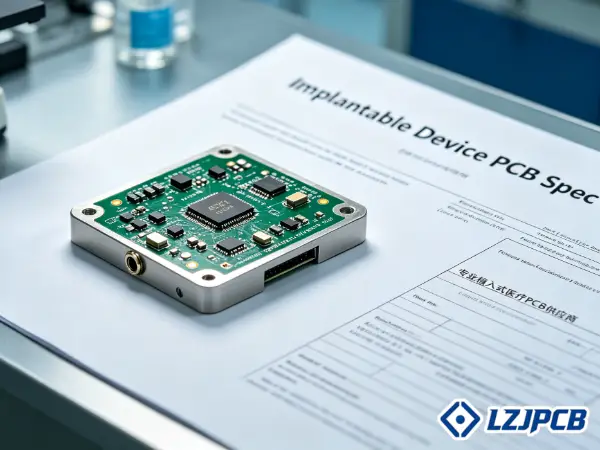
I have spent over 7 years guiding medical PCB projects through production. I have seen good suppliers and bad ones. Below I share what really matters when you pick a partner for implantable work.
Why Is ISO 13485 Certification the Minimum Requirement?
Many suppliers claim they make "medical" boards, but few hold the right quality system. ISO 13485 is where you must start.
ISO 13485 is the minimum requirement because it proves a supplier runs a medical-device-specific quality management system. This system includes documented traceability, risk management, and strict process controls that general electronics factories do not have.
What ISO 13485 Actually Covers
ISO 13485 is not the same as ISO 9001. ISO 9001 covers general quality. ISO 13485 is built for medical pcb products. It demands that you control every step. It requires you to keep records for years. It demands that you manage risk at each stage.
For implantable devices, this matters even more. The device sits inside a patient. If something fails, the maker must trace the cause. ISO 13485 forces this discipline.
How to Check the Certification
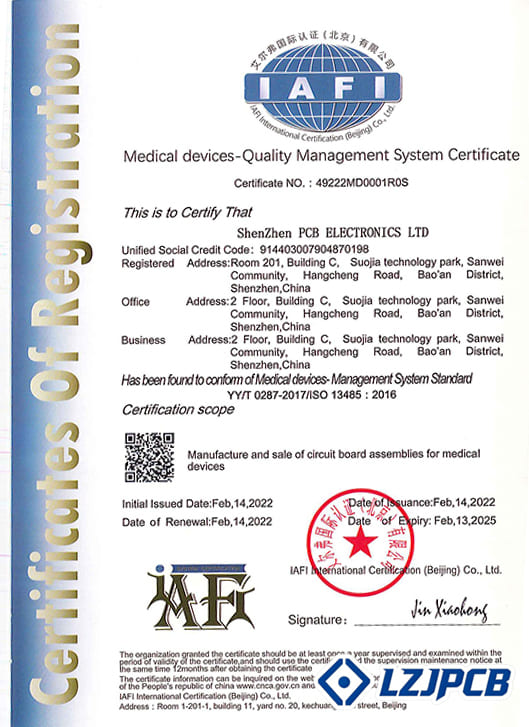
Do not just trust a logo on a website. Ask for the real certificate, check the issue date and the scope. The scope must cover PCB manufacturing and assembly. At LZJPCB, we hold ISO 13485 along with ISO 9001, ISO 14001, and IATF16949.
| Standard | What It Covers | Why It Matters for Implants |
|---|---|---|
| ISO 13485 | Medical device QMS | Core requirement for patient safety |
| ISO 9001 | General quality | Base level, not enough alone |
| IATF16949 | Automotive quality | Shows high reliability discipline |
| ISO 14001 | Environmental | Supports clean process control |
A supplier with the right certificates shows they take medical work seriously. This is your first filter.
Why Do Materials and Biocompatibility Matter More Than Cost?
For most boards, you ask about price and speed. For implantable devices, you must ask different questions first. Materials come before cost.
Biocompatibility matters more than cost because implantable boards may contact human tissue or affect patient safety. The supplier must provide material certifications and documentation aligned with ISO 10993 requirements. Standard PCB materials cannot meet these strict safety needs.
What ISO 10993 Means for Your Board
ISO 10993 covers how materials interact with the body. The laminate, the coating, and the finish all matter. A wrong material can cause harm. So the supplier must give you full material data. They must know which laminates and coatings are safe.
At LZJPCB, we use traceable A-grade laminates from Shengyi, KB, and Isola. We supply UL and RoHS records. We also support REACH with SVHC reports. This paper trail helps you prove safety to regulators.
Why Cheap Materials Fail Here
A low-cost board might pass a quick test, but inside the body, it faces heat, moisture, and chemicals for years. Cheap materials break down and may release harmful substances, ultimately reducing reliability.
| Factor | Standard PCB | Implantable PCB |
|---|---|---|
| Material focus | Cost and lead time | Biocompatibility first |
| Documentation | Basic | ISO 10993 aligned |
| Surface finish | HASL common | ENIG, ENEPIG preferred |
| Lifespan need | Years | Decades inside body |
I always tell clients like Michael in Germany: do not save money on materials for implants, cause the risk is too high. The right finish and laminate protect the patient and your brand.
Why Are IPC Class 3 and Cleanroom Manufacturing So Important?
Implantable devices cannot fail. So they need the highest build standard. This is where IPC Class 3 and cleanrooms come in.
IPC Class 3 and cleanroom manufacturing matter because implantable devices demand the highest reliability for solder joints and workmanship. Cleanrooms control particles and contamination, which is critical when the board must survive inside the body for many years.

What IPC Class 3 Demands
IPC has three classes. Class 1 is basic. Class 2 is for normal products. Class 3 is for high-reliability use, like medical and aerospace. Implantable boards need Class 3.
Class 3 has tight rules for solder joints. It limits voids in BGA joints, demands clean trace edges, and requires careful inspection at each step. Our FPC factory runs a Class 100K cleanroom for this reason.
Why Advanced Technology Skills Count
Implantable devices are small. They use HDI, rigid-flex, flex circuits, fine-pitch BGAs and microvias. The supplier must master these.
| Capability | LZJPCB Spec | Why It Helps Implants |
|---|---|---|
| HDI | 1+N+1 to 3+N+3 | Smaller, denser boards |
| Rigid-flex | 8–14 layers | Fits curved body spaces |
| Min trace/space | 2.5mil | High density routing |
| Min BGA pitch | 0.3mm | Fine-pitch components |
| Min laser via | 4mil | Microvia interconnects |
We build rigid-flex and FPC boards for medical use, including FPCs for medical device controllers and control boards for MRI systems. This proven work matters more than a low quote.
Why Should Your Supplier Be an Engineering Partner, Not Just a Vendor?
The best supplier does more than make boards. They join your team, helping you prevent problems before they happen.
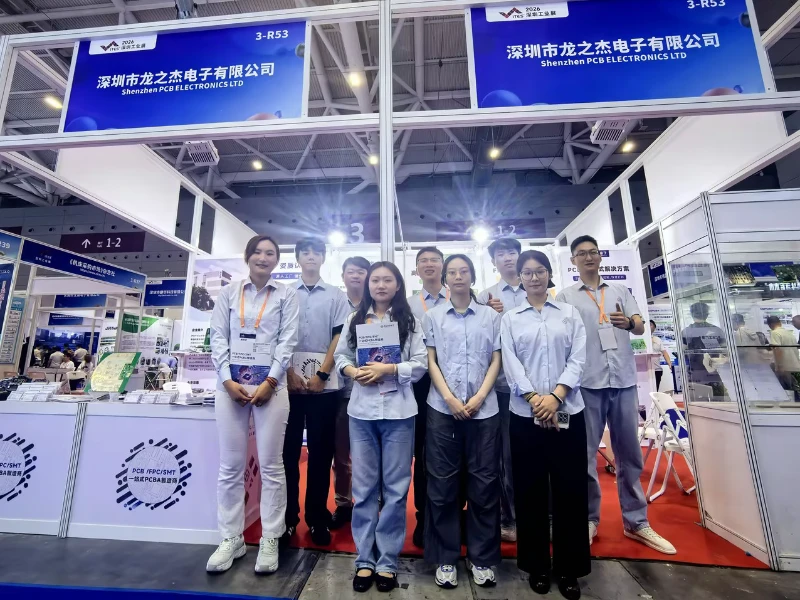
Your supplier should be an engineering partner because implantable programs need change-control, prototype-to-production scaling, regulatory documentation, and proactive risk management. A simple vendor only ships boards, but the partner protects your full product lifecycle.
Why DFM and Traceability Are Key
A real partner runs DFM reviews early, they catch design flaws before production. My DFM reviews have saved an average of $3,200 per project in rework. For implants, this also saves time and reduces risk.
Full traceability is also vital. You need records of raw materials, components, and operators, as well as batch records for audit and recall purposes. If a device fails, you must trace the lot. so we keep full lot-level records for this reason.
What Testing Capabilities to Demand
Prototype cost is not the main thing. long-term reliability testing is. Ask what tests the supplier can run.
| Test Type | Purpose |
|---|---|
| AOI | Find surface defects |
| X-Ray | Check hidden BGA joints |
| Electrical test | Confirm function |
| Cleanliness check | Verify contamination control |
| Environmental test | Confirm long-term reliability |
We run 100% electrical test plus dual AOI inspection, and use 3D SPI and X-Ray. We support the full path from prototype to mass production with no process change. This is what makes a true partner.
Conclusion
Choose a supplier like LZJPCB with ISO 13485, IPC Class 3, biocompatible materials, cleanrooms, full traceability, and strong testing. Pick a true engineering partner, not just a vendor.