


SMT and SMD are not the same thing. SMT (Surface Mount Technology) is the board-level assembly process. SMD (Surface Mount Device) is the physical electronic component. In short, SMT is the method, and SMD is the object placed by that method.
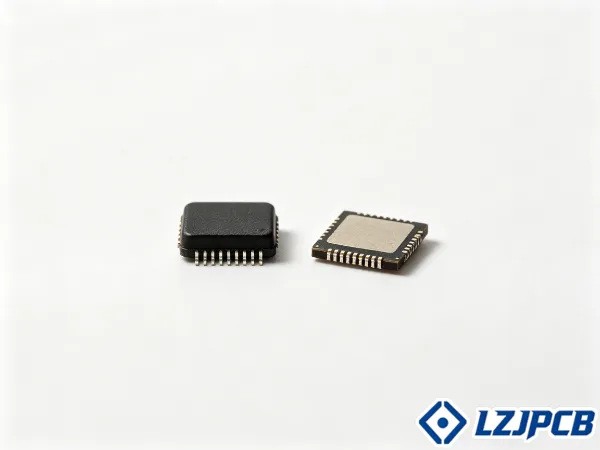
I have managed over 300 PCB projects across 20+ countries. I have seen this mix-up cause real cost problems. Let me break down each side clearly, so you can buy smarter and talk to your factory with confidence.
What SMT Assembly Includes
SMT delays and defects often start at the assembly stage. If you do not know what SMT assembly covers, you cannot judge if your factory is doing it right.
SMT assembly is the full process of placing and soldering SMD components onto a PCB surface. It runs in a fixed sequence: stencil alignment, solder paste printing, pick-and-place mounting, reflow soldering, and AOI inspection. Each step controls quality and yield.
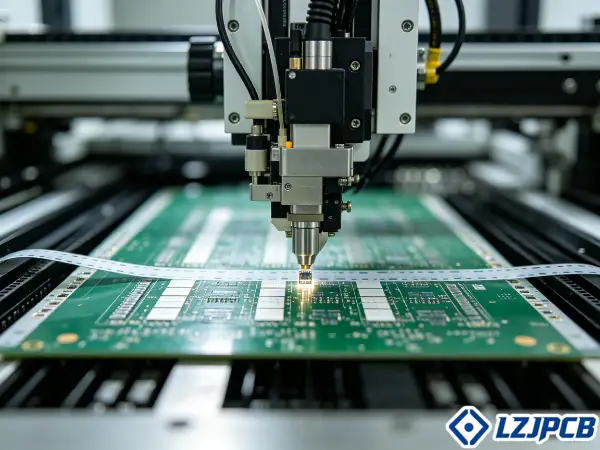
SMT became mainstream in the 1980s. It replaced through-hole insertion because electronics needed to be smaller, faster, and cheaper. SMT does not need reserved holes for component pins. The component body and the solder joint sit on the same side of the board. This lets us use both sides of a PCB and pack more parts per unit area.
Stencil printing and solder paste
The SMT process starts with stencil alignment on the board. We line up a metal stencil over the PCB pads. Then we apply solder paste through the stencil with a squeegee. This gives a uniform, controlled coat on each pad.
Solder paste is a mix of solder alloy particles and flux. It is the bonding material for the whole process. It also acts as a temporary glue. Wet paste holds each component in place during pick-and-place.
Stencil design matters a lot here. Here are the key parameters we control at LZJPCB:
| Parameter | Typical Value | Why It Matters |
|---|---|---|
| Stencil thickness | 0.1–0.15mm | Sets paste volume per pad |
| Aperture area ratio | ≥1.5 | Ensures clean paste release |
| Alignment tolerance | Tight | Prevents paste misprint and shorts |
| Material | Stainless steel | Durable, laser-cut precision |
Misalignment at this step causes paste errors. Paste errors cause placement defects later. So we treat stencil setup as a critical control point, not a routine task.
Pick-and-place and reflow soldering
After paste printing, a pick-and-place machine mounts each SMD onto the board. Modern machines place thousands of parts per hour. Early machines handled only a few simple types. Small or complex parts once needed hand placement. Today automation handles almost all of it.
After placement, boards move gently into a reflow oven. Rough handling shifts parts. The oven heats the board through several zones. It melts the paste and forms permanent solder joints.
Reflow needs a careful temperature profile. For lead-free SAC305 solder, we use these stages:
- Preheat: ramp 1–4°C/sec up to about 150°C
- Soak: 60–120 sec at 150–200°C
- Reflow: peak 235–250°C for 30–60 sec
- Cooling: controlled ramp down, around ≤6°C/sec
A bad profile causes damage. Too much uneven heat causes tombstoning, where small parts stand up on one end. This is why thermal control is not optional. After reflow, boards pass through AOI and then further testing.
What SMD Assembly Includes
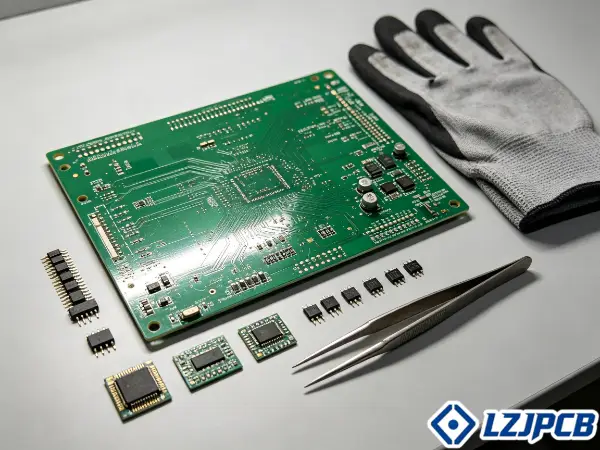
SMD assembly uses surface-mount devices, the actual electronic components soldered onto board pads. These parts have short leads or flat terminations instead of long wire leads. This structure enables denser packing, higher integration, and smaller, lighter boards.
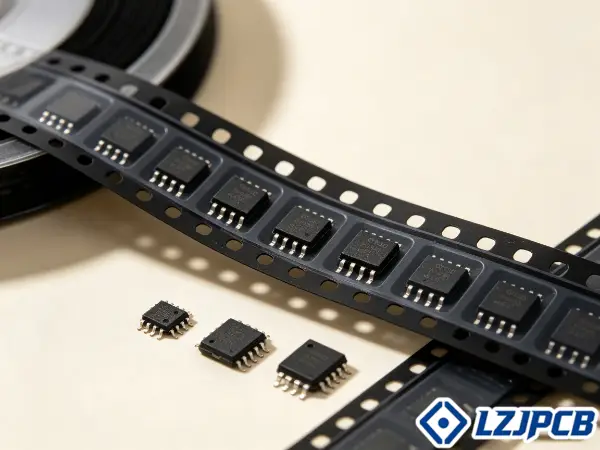
SMDs came from a clear market need. Through-hole parts could not scale to the density modern electronics demanded. So the industry moved to miniaturized surface parts. Nearly every through-hole component now has an SMD version, from a simple resistor to a complex IC. Some high-power and high-stress parts still use through-hole, but SMD dominates mainstream work.
Component types used in SMD
SMD parts fall into a few clear groups. Knowing them helps you read a BOM and talk to your supplier.
- Passive components: resistors, capacitors, inductors, and composite devices
- Discrete components: diodes and transistors
- Active / IC devices: integrated circuits
- Electromechanical devices: switches, relays, connectors, and micro-motors
Package size is just as important as type. SMD packages use size codes. Here is a quick reference I share with clients:
| Package | Size (mm) | Notes |
|---|---|---|
| 0201 | 0.6 × 0.3 | Very small, needs tight stencil control |
| 0402 | 1.0 × 0.5 | Common in dense designs |
| 0603 | 1.6 × 0.8 | Easy to place and rework |
| 0805 | 2.0 × 1.25 | Good for hand-soldering |
| SOIC / QFP | Varies | Leaded ICs, fine pitch |
| BGA | Varies | Hidden joints, needs X-ray |
Smaller packages like 0201 push stencil and placement precision to their limits. That is why component choice affects your whole process, not just the part price.
Packaging and handling requirements
SMD parts need careful handling before they ever reach the oven. Many are moisture sensitive. If moisture gets trapped inside a package, reflow heat turns it to steam. This cracks the part, a defect called popcorn.
We follow moisture sensitivity level (MSL) rules for this. Each part has a floor-life limit once its bag is opened. For example, MSL 3 parts may need baking at 125°C for 24 hours after long exposure. We also store parts in sealed bags with desiccant.
Here is how we protect SMD components at LZJPCB:
- Sealed, dry storage with humidity control and desiccant packs
- ESD-safe handling to prevent static damage
- FIFO warehousing so older stock ships first
- IQC inspection on all incoming parts
- Baking for moisture-exposed parts before assembly
Skipping these steps leads to hidden defects that AOI cannot always catch. Good handling is a quiet part of quality that many buyers never see.
How SMT and SMD Work Together
SMT and SMD work as a team. SMD components provide the small, dense parts. SMT provides the fast, accurate process to place and solder them. Each one amplifies the other. Small parts save board space, and the SMT process places them at high speed with high accuracy.
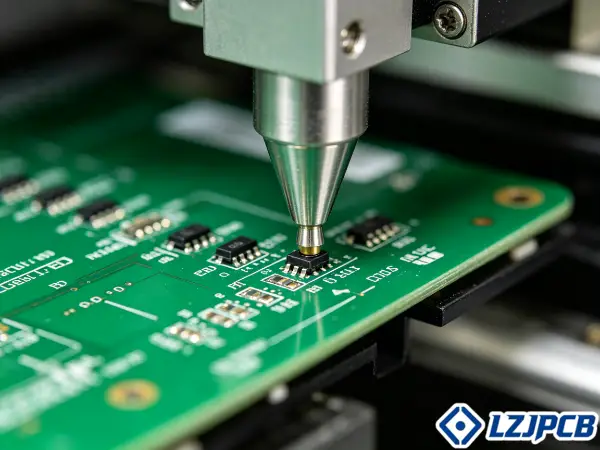
There is a two-way evolution here. SMT processes have improved to handle smaller and smaller SMD parts. At the same time, SMD parts have become more miniaturized and more complex to pack more function into less space. They push each other forward.
Think of it this way. The SMD is the "what." The SMT is the "how." A 0201 resistor means nothing until an SMT line places it with a solder paste that matches its pad, at a temperature its package can survive.
This is why I always plan them together on a project. When a client sends me a design, I check the SMD package list first. Then I set the stencil, paste type, and reflow profile to match those parts. If the two do not match, you get tombstoning, bridging, or weak joints. When they match, you get a clean, reliable board at full line speed. The value compounds only when both sides fit.
Why the Difference Matters for Buyers
SMT and SMD affect two separate budget lines. SMD drives your component sourcing and BOM cost. SMT drives your assembly and process cost. If you confuse them, you cannot compare quotes fairly or control either cost driver.
For a procurement specialist like many of my European clients, this clarity is money. Let me split it into the two areas that hit your budget most.
It affects component sourcing decisions
Your SMD choices decide your BOM cost and supply risk. Package size, part type, and availability all sit on the SMD side, not the SMT side.
When I run BOM procurement, I look at these SMD-driven factors:
- Package availability: common sizes like 0402 and 0603 are easy to source; rare packages cost more and take longer
- Genuine sourcing: we buy from original makers and tier-1 agents, 100% traceable
- Alternatives: if a part is out of stock, we select a fit-form-function match
- MSL handling: moisture-sensitive parts need extra storage and baking cost
- Lead time: the right part in stock ships in as fast as 3 days
Our supply chain team has 20+ professionals for exactly this. A wrong SMD call can stall a whole build. So we lock the component side early.
It impacts assembly cost
Your SMT process choices decide your assembly cost. This is a different budget line from parts, and it scales with volume.
SMT saves cost through several factors at once: fewer production runs, lower error rates, higher efficiency, and smaller parts. It also removes drilling for each component lead, which cuts board fabrication complexity.
Here is a simple cost comparison I use with clients:
| Factor | SMT | Through-Hole |
|---|---|---|
| Placement speed | 10,000+ parts/hour | 200–500 parts/hour (manual) |
| Automation | Easy | Harder |
| Board area | Smaller | Larger |
| Board weight | Lighter | Heavier |
| Best for | High density, volume | High power, high stress |
SMT wins on speed and density. Through-hole still wins for high-power parts and boards under heavy mechanical stress. The break-even depends on volume. For most orders above a small batch, SMT is the lower-cost path per board.
Common Misunderstandings About SMT and SMD
The biggest misunderstanding is treating SMD as a type of SMT. It is not. SMD is a component. SMT is a process. Other common myths confuse their age and their scope. Fixing these ideas saves you from costly ordering mistakes.
I hear the same confusions in emails every week. Here are the ones I correct most often, with the plain facts.
-
Myth1: "SMD is a kind of SMT." Wrong. SMD is a physical part. SMT is the assembly method that places that part. One is an object, one is a process.
-
Myth2: "All surface mount boards use only SMDs." Not always. Many boards mix SMT and through-hole. These mixed boards may use both reflow and wave soldering.
-
Myth3: "SMT is newer than SMD." They grew together. The process and the parts evolved side by side from the 1960s, and became mainstream in the 1980s.
-
Myth4: "SMT is always cheaper." Usually true at volume, but not for high-power or high-stress parts. Those often still favor through-hole for better heat and mechanical strength.
-
Myth5: "AOI catches every defect." No. AOI catches misalignment, bridging, and missing parts well. It cannot see hidden joints under BGA packages. Those need X-ray inspection.
Why does the confusion last? Because the terms sound alike and often appear in the same sentence. Once you separate the process from the part, the rest becomes clear. I always ask new clients which one they mean before I quote. That one question prevents a lot of rework.
FAQ About SMT and SMD Assembly
These are the short, honest answers I give clients on SMT and SMD assembly, from defects to testing to material handling. Each answer reflects real practice on our lines at LZJPCB.
Q: What are the most common SMT defects?
The top ones are tombstoning, solder bridging, insufficient paste, head-in-pillow, and voiding. Most come from paste printing, placement offset, or thermal imbalance. We prevent them with good stencil design, tight placement accuracy, and a controlled reflow profile.
Q: Can SMD parts be soldered by hand?
Larger packages like 1206 and 0805 can be hand-soldered. Smaller parts like 0402 and 0201 need magnification. QFP and BGA parts are not viable by hand. Automated lines reach 99.5–99.9% yield, while manual work sits near 80–90%.
Q: What testing happens after AOI?
AOI is not the final gate. After AOI, boards can go to In-Circuit Test, X-ray for hidden BGA joints, and functional testing. Flying probe suits prototypes and low volume. We choose the mix based on your board and industry class.
Q: Which industries need the strictest SMT standards?
Medical and aerospace need IPC Class 3, the highest. Industrial control uses Class 2. Consumer uses Class 1. Higher classes mean stricter inspection, full traceability, and tougher thermal cycling checks. We hold ISO13485 and IATF16949 for medical and automotive work.
Q: When should I choose through-hole over SMT?
Choose through-hole for high-power parts, high mechanical stress, and some high-reliability builds. Choose SMT for high density, high frequency, and cost-sensitive volume orders. I help clients decide this at the design review stage.
Conclusion
SMT is the process. SMD is the part. Know the difference, and you buy smarter, compare quotes fairly, and control both your component and assembly costs.