


One bad solder joint inside a CT scanner can ruin a patient scan. The board fails, the image fails, and trust fails. You cannot afford that risk.
Medical PCB manufacturing and assembly for CT machines means building high-reliability boards under ISO 13485 quality systems and IPC Class 3 standards. These boards handle imaging, motion control, power, and patient data, so they need full traceability, tight tolerances, and strict inspection.
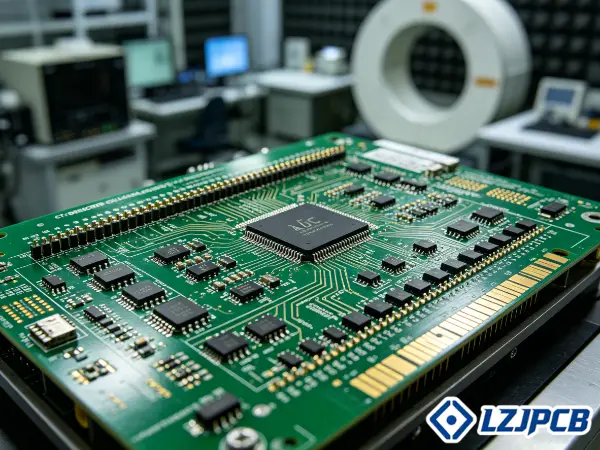
I have worked on more than 300 PCB projects, and CT boards always demand my full attention. Let me show you what really matters when you source these boards.
What Defines a Medical PCB for CT Machines?
A standard board cannot run a CT scanner. The signals are faster. The voltages are higher. One weak point can stop a diagnosis. You need a board built for life-critical work.
A medical PCB for CT machines is a high-reliability board built to ISO 13485 and IPC Class 3 standards. It processes imaging, motion, and power signals with near-zero defect tolerance, full traceability, and tighter tolerances than general medical boards.
A CT machine never works with a simple board. It uses many boards that work together. Each board has one job, and each job is critical. Let me break down what makes these boards special.
The role of PCB in CT imaging systems
A CT machine turns X-ray data into clear images. The PCB sits at the center of this work. It moves data from detectors to processors, It controls the spinning gantry, It manages power to the X-ray tube.
CT imaging systems rely on multilayer PCBs with controlled impedance, EMI shielding, and high-speed signal routing. These features keep the image data clean. If the signal gets noisy, the image gets blurry. A blurry image means a bad diagnosis.
Here are the main jobs a PCB does inside a CT system:
- It carries detector data to the data acquisition system at high speed.
- It controls motion in the rotating gantry.
- It manages high-voltage power for the X-ray generator.
- It links memory and processors on the main image board.
CT boards must deliver extreme reliability. They process imaging, motion, power, and patient diagnostic data with little room for failure. I treat every CT board as a patient-safety device, not just an electronic part.
Why CT Machine PCBs Require Tighter Tolerances Than Standard Medical PCBs
A patient monitor can run on a normal medical PCB board. A CT scanner cannot. The data loads are far bigger. The signals run above 1 GHz. The power stages run much hotter.
CT boards need tighter tolerances because the signal speed and density push past what standard boards handle. A small impedance error breaks the image data. A small plating gap breaks the via under thermal stress.
| Factor | Standard Medical PCB | CT Machine PCB |
|---|---|---|
| Signal speed | Up to ~1 GHz | Often 5 GHz or higher |
| Layer count | 4–12 layers | Up to 30 layers |
| Impedance control | ±10% | ±5% |
| Thermal stress | Moderate | High and continuous |
| Defect tolerance | Low | Near zero |
I always push CT boards beyond the minimum IPC Class 3 spec. Tighter dielectric control and thicker copper plating make the board last longer. That extra margin protects the scan and the patient.
Types of Medical PCBs Used in CT Machine Subsystems
A CT machine is not one board, there are many boards in many roles. Each subsystem has its own needs. Pick the wrong board type, and the subsystem fails.
CT machines use four main PCB types: high-speed digital boards for data acquisition, high-voltage boards for X-ray control, flex and rigid-flex boards for the rotating gantry, and HDI boards for compact detector modules.
Each board type solves a different problem. Some move data fast. Some hold high voltage. Some bend inside tight spaces. Let me walk through each one.
High-Speed Digital PCBs for Data Acquisition and Image Reconstruction
The detector sends huge data loads every second. The data acquisition system must catch it all. A slow board drops data. Dropped data means lost image detail.
High-speed digital PCBs handle this load with many layers and tight impedance control. Modern CT data links run at 10 Gbps or more. These boards need low-loss materials and clean routing.
I use multilayer stackups with controlled impedance for these boards. Advanced SMT assembly is common here. The boards carry fine-pitch BGAs, QFPs, and dense routing. My team places these parts with high accuracy to keep the data clean.
High-Voltage PCBs for X-Ray Generator Control
The X-ray tube needs strong, stable power. The high-voltage board controls that power. A weak board can arc or track. An arc can damage the whole system.
High-voltage CT boards need wide creepage gaps and strong insulation. They often use ceramic substrates for high thermal resistance and good insulation. The material must resist tracking under stress.
Here is what I check on every high-voltage CT board:
- Creepage and clearance gaps match the voltage level.
- The base material has a high CTI rating.
- The solder mask resists tracking.
- The board passes high-voltage breakdown tests.
Flex and Rigid-Flex PCBs for Rotating Gantry Assemblies
The CT gantry spins fast. The boards inside must take the vibration. They must also fit a tight, curved space. A rigid board alone cannot do this.
Flex and rigid-flex PCBs solve the space and motion problem. They bend without breaking. They cut down on connectors, which removes failure points. Polyimide laminates work well here because they resist heat up to 260°C.
I build rigid-flex boards in our own FPC factory. This lets me control the flex sections and rigid sections in one process. The result is a board that survives years of gantry rotation.
HDI PCBs for Compact Detector Modules
The detector module packs thousands of sensors in a small space. Each sensor needs a connection. A normal board cannot route that many signals in that space.
HDI PCBs use laser microvias to pack dense routing. They connect thousands of photodiodes to the acquisition system. They keep signal integrity high while staying small.
I use HDI stackups like 1+N+1, 2+N+2, and 3+N+3 for these modules. Laser vias as small as 4 mil let me route fine signals. This keeps the detector compact and the image sharp.
How to Choose the Right PCB Materials for CT Machine Applications
The wrong material ruins a good design. A cheap laminate loses signal. A weak laminate fails under heat. Material choice is where many CT projects go wrong.
Choose CT machine PCB materials based on four needs: low-loss laminates for signal integrity, high thermal conductivity for power stages, high CTI for high-voltage sections, and lead-free compatible materials for assembly.
No single material fits the whole board. A CT board often mixes materials in one stackup. Let me explain how I pick each one.
Material Selection for High-Frequency Signal Integrity in CT Detectors
CT detectors push signals above 5 GHz. Standard FR4 loses too much energy at that speed, the signal weakens before it reaches the processor. The image suffers.
For high-frequency CT sections, I use low-loss, low-Dk laminates like Rogers, Megtron 6, or Isola. These keep the signal clean over long traces. They cut crosstalk and EMI.
If your CT design has imaging or low-noise analog sections, tell me early. I tune the layout, grounding, and material to fit. Early planning saves a costly redesign later.
Thermal Management Materials for High-Power CT Generator PCBs
Modern CT systems run hot. Higher processing power and AI imaging add heat. Compact designs trap that heat. Standard FR4 cannot handle long high-temperature runs.
For high-power CT boards, I use high thermal conductivity materials, metal-core substrates, or heavy copper. These pull heat away from hot chips, they keep the board within safe limits during long scans.
Here are the thermal tools I use most:
- Heavy copper up to 12 oz for power planes.
- Thermal vias under hot components.
- Embedded copper coins for direct heat transfer.
- Metal-core substrates for power sections.
CTI and Tracking Resistance Requirements for High-Voltage CT Sections
High voltage can carve a path across a board surface, this is called tracking. Once it starts, the board fails. The base material must resist this.
For high-voltage CT sections, I choose materials with a CTI rating of 600V or higher. A high CTI rating means the surface resists tracking, this keeps the X-ray power stage safe.
I also widen creepage gaps and pick a tracking-resistant solder mask. These steps work together with the high-CTI base, the board then holds high voltage without failure.
Material Compatibility with Lead-Free and High-Temperature Assembly Processes
Lead-free solder needs higher reflow heat. A weak laminate warps or delaminates at that heat. The board fails before it ever runs.
For lead-free CT assembly, I use high-Tg materials that survive 300°C solder float. High-Tg FR4 at 200°C or higher works for many sections. Polyimide handles the hottest spots.
| Section | Material | Tg | Why |
|---|---|---|---|
| Detector signal | Rogers / Megtron 6 | Varies | Low loss, high speed |
| Power stage | Metal core / heavy copper | High | Heat removal |
| High-voltage | Ceramic / high-CTI FR4 | High | Insulation, tracking |
| General digital | High-Tg FR4 | 180°C+ | Lead-free survival |
If your board will face sterilization or harsh cleaning, tell me up front. I match the material to that environment before the build.
How Much Does CT Machine PCB Assembly Cost?
Price surprises kill budgets. A CT board quote can swing wide. You need to know what drives the number before you commit.
CT machine PCB assembly cost depends on bare board complexity and assembly labor. A bare CT board may cost tens to hundreds of dollars per unit, while full assembly with sourcing and testing can multiply that several times.
The bare board is only part of the price. Components, testing, and sourcing add the rest. Let me break down where your money goes.
Cost Breakdown: Bare Board vs. Fully Assembled CT PCBs
The bare board is the fabricated PCB with no parts. The assembled board adds components, soldering, and testing. The gap between the two is large for CT boards.
A bare CT board costs more than a normal board because of high layer counts and special materials. A fully assembled board costs much more because of fine-pitch parts, sourcing, and strict testing.
| Cost element | Share of total | What drives it |
|---|---|---|
| Bare board | 20–40% | Layers, materials, HDI |
| Components | 30–50% | BGAs, sourcing, traceability |
| Assembly labor | 10–20% | Fine-pitch SMT, rework |
| Testing | 10–20% | AOI, X-ray, functional test |
I give a transparent markup on components. You see the real part price plus a clear fee. No hidden numbers.
5 Cost Drivers That Impact CT PCB Pricing
Many small factors push CT board prices up. Some you control. Some you cannot. Knowing them helps you plan your budget.
Here are the five cost drivers I see most:
- Layer count: More layers mean more process steps and higher cost. CT boards can reach 30 layers.
- Materials: Rogers, ceramic, and metal cores cost more than FR4.
- Component sourcing: Genuine, traceable parts from agents cost more than gray-market parts.
- Testing depth: AOI, X-ray, and functional tests add cost but cut field failures.
- Volume: Low-volume CT runs cost more per board than high-volume runs.
I help you balance these. For example, I may split materials so only the high-frequency section uses Rogers. This cuts costs without losing performance.
6 Quality Tests That Medical PCB Assembly for CT Machines Must Pass
A failed CT board in the field is a disaster. It stops scans and risks patients. Testing catches the failure before it ships. Skipping tests is never worth it.
CT machine PCB assembly must pass six tests: IPC Class 3 workmanship checks, AOI and X-ray inspection, electrical testing, thermal cycling, humidity testing, and ionic contamination testing.
Each test catches a different failure. Together they form a safety net. Let me walk through what each one does.
IPC Class 3 vs. Class 2: Which Standard Applies to CT PCBs
IPC sets the rules for board quality. Class 2 fits normal electronics. Class 3 fits life-critical electronics. CT boards are life-critical.
CT boards must meet IPC Class 3, the highest reliability tier. Class 3 demands no annular ring breakout, thicker barrel plating, and zero plating voids. These rules keep the board working under stress.
| Parameter | Class 2 | Class 3 |
|---|---|---|
| Min barrel plating | 20 μm | 25 μm |
| Internal annular ring | 0.025 mm | 0.05 mm |
| Breakout allowed | Some | None |
| Use case | Consumer | CT, life-critical |
I require ISO 13485-style quality control plus IPC-A-610 Class 3 workmanship on every CT board. This is not optional for medical work.
Automated Optical Inspection and X-Ray Inspection for CT Assemblies
Some defects hide from the eye. A solder ball under a BGA is invisible. A bad joint inside a dense board stays hidden. You need machines to find them.
AOI and X-ray inspection catch solder and component defects. AOI scans the surface for bad joints and wrong parts. X-ray sees under BGAs and QFNs where the eye cannot reach.
My PCBA lines use 3D SPI, inline AOI, and X-ray on every CT lot. These tools catch defects early. Catching a defect at inspection costs far less than catching it in the field.
Electrical Testing: Continuity, Isolation, and High-Voltage Breakdown
A board can look perfect but still fail electrically. A broken trace shows no surface defect. A weak insulation gap shows no surface defect. Electrical testing finds these.
Electrical testing checks continuity, isolation, and high-voltage breakdown. Continuity confirms every connection works. Isolation confirms no shorts. High-voltage breakdown confirms the X-ray section holds its rated voltage.
I run 100% electrical test on bare boards. For high-voltage CT sections, I add breakdown testing. This makes sure the power stage stays safe under full load.
Thermal Cycling and Humidity Testing for CT Machine Operating Environments
A CT machine runs for years. It heats up and cools down many times. Hospital air can be humid. The board must survive all of this.
Thermal cycling and humidity testing prove the board lasts in real use. Thermal cycling runs the board through hot and cold cycles. Humidity testing checks for failure in moist air.
A common thermal shock test runs 100 cycles from -60°C to +120°C with no failures. I use these tests to confirm the board will not crack or fail joints over its long life.
Cleanliness and Ionic Contamination Testing for Medical-Grade Reliability
Leftover flux can cause slow failures. Ions on the surface can grow into shorts over time. This failure may not show for months. Cleanliness testing stops it.
Ionic contamination testing measures surface cleanliness. The IPC limit is 1.56 μg/cm² NaCl equivalent, and I aim below 1.0 μg/cm² for medical boards. A clean board resists electrochemical migration.
Quality assurance for CT boards includes AOI, X-ray, functional testing, solderability checks, and contamination control. I run all of these to reach medical-grade reliability.
Certifications and Regulatory Requirements for CT Machine PCBs
A great board with no paperwork still fails an audit. Regulators care about proof, not promises. Missing a certification can block your whole product.
CT machine PCBs require ISO 13485 quality management, support for FDA 510(k) and IEC 60601-1, RoHS and REACH compliance, and full documentation with traceability for audit-ready production.
Each certification covers a different risk. Some cover quality. Some cover safety. Some cover materials. Let me explain what your supplier must support.
ISO 13485: The Non-Negotiable Quality Management Standard
ISO 13485 is the quality system for medical devices. It is the base requirement for any medical PCB supplier. Without it, your board carries audit risk back to you.
ISO 13485 covers design, manufacturing, storage, and servicing. The scope of the certificate matters more than the certificate itself. A supplier certified for PCB assembly can build your CT board.
LZJPCB holds ISO 13485 along with ISO 9001, ISO 14001, and IATF 16949. We build CT boards under these systems. This gives you a quality framework you can audit.
FDA 510(k) and IEC 60601-1: What Your PCB Supplier Must Support
The FDA 510(k) clears your device for the US market. IEC 60601-1 sets the safety rules for medical electrical equipment. Your PCB supplier must support both, even if you own the filing.
Your supplier supports FDA 510(k) by keeping design and production records that match your submission. They support IEC 60601-1 by meeting its safety and EMC rules, such as IEC 60601-1-2.
I make sure CT boards meet the EMC and isolation rules these standards demand. I keep the records you need for your filing. This keeps your path to market clear.
RoHS and REACH Compliance for Medical CT Machines
RoHS limits harmful substances in electronics. REACH controls chemicals in the EU. Both apply to medical CT machines sold in Europe. Non-compliance blocks the sale.
RoHS and REACH compliance mean the board uses safe, traceable materials. RoHS bans lead and other harmful metals. REACH requires reports on substances of very high concern.
LZJPCB provides RoHS and REACH compliance with SVHC reports. We use UL and RoHS traceable laminates. This keeps your CT machine legal in global markets.
Documentation and Traceability Requirements for Audit-Ready Production
When an auditor asks how a board was made, you need answers fast. No records means no defense. Full traceability is your proof.
Full traceability covers components, materials, assembly steps, and test records. Each board links to its full history. This supports compliance and product accountability.
Here is what I trace on every CT board:
- Laminate, prepreg, and copper foil lots.
- Each process step with operator and equipment ID.
- AOI, X-ray, and electrical test results.
- Component lot and date codes from the BOM.
I keep these records under revision control. You can audit any board across its full lifecycle.
How to Qualify a Medical PCB Assembly Supplier for CT Machine Production
The wrong supplier puts your whole product at risk. A cheap quote means nothing if the boards fail. Qualifying a supplier well protects your business.
Qualify a CT machine PCB supplier by checking medical-device experience, ISO 13485 and IPC Class 3 capability, AOI and X-ray inspection, DFM review, multilayer and SMT maturity, and a strong component sourcing network.
Two factors decide success more than price: real CT experience and a strong supply chain. Let me explain both.
The Importance of a Supplier’s Experience with High-Mix Low-Volume Production
CT production is rarely high volume. You build many board types in small runs. A supplier built for mass production struggles with this. You need a high-mix, low-volume partner.
High-mix, low-volume work needs fast setup and tight process control. The supplier must switch between board types without losing quality. They must support both rapid prototyping and scalable production.
LZJPCB has dozens of CT machine PCB projects. We run high-mix, low-volume work daily. We support prototyping and scale-up so you can develop fast and still stay compliant. I always confirm we handle DFM review before the build to catch problems early.
Why a Supplier’s Component Sourcing Network Directly Impacts Your Lead Time
A board cannot ship without parts. One missing chip stops the whole build. A weak sourcing network means long delays. A strong one keeps you on schedule.
A strong sourcing network shortens lead time and lowers counterfeit risk. The supplier buys from original makers and tier-1 agents. They keep an approved vendor list with backup parts.
Our supply chain team has 20+ professionals and global reach, including Shenzhen and Indonesia. We source genuine, traceable parts and kit samples in as fast as three days. This network keeps your CT project moving.
Customization Options for CT Machine PCB Assembly
A standard board rarely fits a CT design. The mechanical, thermal, and signal needs are unique. You need custom options to make the board work.
CT machine PCB assembly supports many custom options, including stiffeners, edge plating, controlled impedance, special stackups, and turnkey box build for one quality system from procurement to shipment.
Customization is where a dedicated engineer makes the difference. Most suppliers run website order forms. I work with you one-on-one to tune the board.
Common Customization Requests: Stiffeners, Edge Plating, and Controlled Impedance
CT boards often need extra features beyond a basic build. These features solve real mechanical and electrical problems. The right choice depends on where the board sits in the system.
The most common custom requests are stiffeners, edge plating, and controlled impedance. Stiffeners add support to flex sections. Edge plating protects board edges and adds shielding. Controlled impedance keeps high-speed signals clean.
Here are the custom options I provide most for CT boards:
- Stiffeners: Add rigid support to flex areas in the gantry.
- Edge plating: Protect edges and improve EMI shielding.
- Controlled impedance: Hold ±5% impedance for high-speed links.
- Back drilling: Remove via stubs for clean high-speed signals.
- Turnkey box build: Combine procurement, assembly, and final test in one flow.
I also support turnkey sourcing, box build, and final test. This gives you one quality system from parts to shipment. To speed my feasibility review, send me Gerbers, BOM, stackup, assembly drawings, and any high-voltage or shielding constraints.
Common Mistakes in CT Machine PCB Sourcing and How to Avoid Them
Small sourcing mistakes cause big problems later. The wrong material or a missed risk can stop production. I have seen these errors hurt good projects. You can avoid them.
The most common CT PCB sourcing mistakes are wrong material grades, underestimating assembly complexity, ignoring component obsolescence, and skipping clear specs. Avoid them with early planning and an experienced partner.
Each mistake has a clear fix. Most come down to planning early and talking to your engineer. Let me show you the common traps.
Specifying Incorrect Material Grades for High-Frequency CT Sections
Some buyers pick FR4 to save money on a high-speed board. The signal then loses energy and the image suffers. The fix costs more than the savings.
The mistake is using a standard grade where a low-loss grade is needed. The fix is to match the material to the signal speed. High-frequency CT sections need low-Dk, low-loss laminates.
I review your stackup before the build. If a section runs fast, I flag it and suggest the right material. This avoids a costly second spin.
Underestimating the Complexity of Assembly for Mixed-Technology CT Boards
A CT board often mixes SMT, through-hole, fine-pitch BGAs, and flex sections. Each needs a different process. A buyer who treats it as a simple board gets surprised by rework and delays.
The mistake is planning for a simple assembly when the board is mixed-technology. The fix is to plan for the hardest part first. Confirm the supplier has mature SMT and multilayer skills.
My PCBA team handles 01005 parts, 0.35 mm pitch BGAs, and rigid-flex boards. We place 8 million parts per day across three factories. This maturity handles mixed-technology CT boards without surprises.
Overlooking Long-Term Component Obsolescence in CT Machine Designs
A CT machine lives 10 to 15 years. Parts go obsolete in that time. If you do not plan for it, your design stalls when a chip disappears. This is a hidden risk.
The mistake is ignoring the part lifecycle during design. The fix is to plan backups early. Use an approved vendor list with alternate parts for each critical component.
My BOM engineers check part lifecycle and suggest alternatives. We hold tens of thousands of stock items. This keeps your CT design alive when a part goes end-of-life.
Frequently Asked Questions About CT Machines PCB Manufacturing and Assembly
Buyers often ask me the same questions about CT boards. Clear answers help you plan and avoid mistakes. Here are the ones I hear most.
What standard do CT machine PCBs follow?
CT machine PCBs follow IPC Class 3 workmanship and ISO 13485 quality management. These give the high reliability that life-critical imaging needs.
How many layers do CT boards use?
CT boards often span up to 30 layers. The exact count depends on the subsystem and signal density.
What materials suit CT detector boards?
Low-loss, low-Dk laminates like Rogers, Megtron 6, or Isola suit detector boards. They keep high-speed signals clean above 5 GHz.
What should I send for a CT board quote?
Send Gerbers, BOM, stackup, assembly drawings, and any high-voltage or shielding constraints. This speeds my feasibility review.
Can LZJPCB handle full turnkey CT assembly?
Yes. We provide turnkey PCB assembly, multilayer manufacturing, component sourcing, testing, and scalable production from our China and Indonesia bases.
Conclusion
CT machine PCBs demand IPC Class 3 quality, ISO 13485 systems, smart materials, and full traceability. Choose a proven partner like LZJPCB for reliable, audit-ready boards.