


Your immunoassay analyzer reads faint optical signals. One noisy PCB ruins the result. A bad board means wrong diagnoses and lost trust.
PCB assembly and manufacturing for immunoassay analyzers means building ultra-low-noise, high-reliability boards that protect weak diagnostic signals. These boards use multilayer designs, isolated analog sections, IPC-A-610 Class 3 workmanship, and full traceability to meet FDA and ISO 13485 demands.
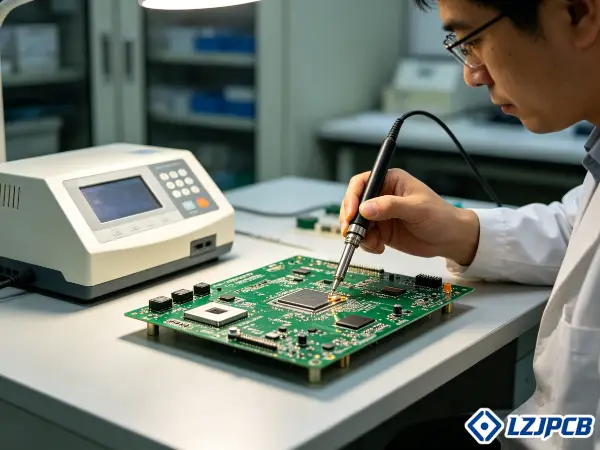
I have built boards for diagnostic gear for over seven years. The rules here are strict, and the room for error is small. Let me walk you through what really matters when you source these boards.
What Defines a Medical Grade PCB for Immunoassay Analyzers
You think any clean board will do. Then your analyzer drifts. The cause hides in poor grounding and weak signal design.
A medical-grade PCB for immunoassay analyzers is a board built for ultra-low noise, signal accuracy, and long-term reliability. It uses isolated analog and digital sections, multilayer routing with 6–12 layers, and Class 3 workmanship to protect weak optical and chemical detection signals.
A medical-grade board is not just about parts. It is about how the board behaves under real lab use. Let me break down the three areas that matter most.
High Impedance Analog Front End Requirements
Immunoassay analyzers read very weak signals. Fluorescence, chemiluminescence, and optical detection often work with tiny voltage levels. The analog front end must catch these signals without adding noise. That is why I treat the front end as the heart of the board.
High impedance inputs are sensitive. They pick up stray current and leakage with ease. I keep guard rings around the input traces to block leakage. I also keep the front end far from heat sources and high-speed lines. Surface cleanliness matters too, since residue can create leakage paths.
Here are the key front-end design rules I follow:
- Use guard traces around high impedance nodes
- Keep input traces short and direct
- Place the front end away from digital noise
- Control surface cleanliness to stop leakage
- Pick low-leakage components rated for the input range
A good front end keeps the signal clean from sensor to converter. This protects the accuracy of every test result.
Noise Isolation and Shielding Design Principles
Noise is the enemy of accurate assays. Immunoassay analyzer PCBs must hold ultra-low noise because weak signals distort quickly under EMI or poor grounding. I plan the grounding scheme before I route a single trace. A clean ground is the base of a clean signal.
Analog and digital isolation is a core need here. High-speed digital circuits create switching noise. That noise can ride into the sensor electronics and ruin measurement accuracy. I keep analog and digital grounds split, then join them at one point. I also use dedicated ground and power planes inside the stack.
Multilayer designs help a lot. Most analyzer boards use 6 to 12 layers. The extra layers give room for power, ground, analog, and digital routing. This layout improves signal integrity and system reliability. I add shielding cans over noisy sections when needed.
Good isolation means the digital side never talks to the analog side by accident. That is how you keep the assay honest.
Fluid Handling and Thermal Management Interfaces
Immunoassay analyzers move fluids and control heat. The PCB sits near pumps, valves, and heaters. This brings moisture, vapor, and temperature swings close to the board. I designed the board to survive this setting.
Thermal stability is key. Reagents and reactions need steady heat. The board often drives heaters and reads temperature sensors. I route these high-current paths away from the sensitive analog area. I also plan copper pours to spread heat evenly.
Fluid exposure calls for protection. Conformal coatings like parylene shield the board from moisture, chemicals, and contamination. I apply Parylene C on boards that face harsh lab air. This step adds real life to the product. I also pick connectors and finishes that resist corrosion. The goal is simple: keep the electronics dry, stable, and clean across years of use.
4 Essential Materials and Finishes for Immunoassay Analyzer PCB Manufacturing
Wrong material choices crack under heat, wrong finishes corrode in lab air. Then your board fails months after shipment.
The four essential choices are High TG FR4 or polyimide for the base, ENIG or immersion silver for the finish, controlled dielectric materials for signal integrity, and conformal coating for protection. Each choice supports reliability and accurate signal performance in clinical settings.
Material choices set the limits of the whole board. Pick wrong and no amount of testing saves you. Let me show you how I choose each one.
High TG FR4 vs Polyimide for Immunoassay Analyzers PCB
The base material carries everything. High TG FR4 and polyimide are the two I weigh most. High TG FR4 handles higher heat than standard FR4. It stays stable through reflow and through heater cycles in the analyzer. It also costs less than polyimide. For most analyzer boards, High TG FR4 is my first pick.
Polyimide goes further. It holds up under extreme heat and flexes well. I choose it for boards that face very high temperatures or that need flex sections. The trade-off is higher cost and harder processing.
Here is how I compare them:
| Property | High TG FR4 | Polyimide |
|---|---|---|
| Glass transition (TG) | 170–180°C | Above 250°C |
| Cost | Lower | Higher |
| Thermal stability | Good | Excellent |
| Flex capability | Limited | Strong |
| Best use | Standard analyzer boards | High-heat or flex sections |
I match the material to the thermal zone of the board. Most of the time High TG FR4 covers the need with room to spare.
ENIG and Immersion Silver Surface Finish Options
The finish protects the copper and supports soldering. ENIG is my top choice for medical diagnostic boards. It gives excellent solderability, strong corrosion resistance, and long-term reliability in lab air. The flat surface also suits fine-pitch parts in the analog front end. I use ENIG on most analyzer boards I build.
Immersion silver is a strong second option. It offers good flatness and solid electrical performance at a lower cost. The downside is that silver can tarnish over time if storage is poor. I use it when budget matters and storage is controlled.
Here is my quick guide:
- ENIG: best for corrosion resistance, fine pitch, and long shelf life
- Immersion silver: good cost and electrical performance, needs careful storage
- Both support lead-free assembly and Class 3 builds
- I avoid HASL on fine-pitch analog sections due to flatness limits
The finish seems small, but it decides how the board ages. For diagnostic gear, I lean on ENIG for peace of mind.
Controlled Dielectric Material Selection for Signal Integrity
Signal integrity depends on the dielectric. The dielectric sits between layers and shapes impedance. For analyzer boards with high-speed digital sections, I use controlled dielectric materials. These hold tight tolerance on thickness and dielectric constant. That control keeps impedance steady across the board.
Stable impedance protects fast signals. It stops reflections and keeps data clean. I run impedance control to within ±5% on these boards. I also pick materials with low loss for the high-speed paths.
The choice links back to noise too. A stable stack with clean impedance helps isolate the analog side. When the digital signals stay clean, they leak less into the sensor electronics. I plan the stack with the fab team early. This way the material, the layer count, and the impedance all line up. Good dielectric choice is the quiet step that makes the whole board work.
How to Choose an Immunoassay Analyzer PCB Assembly Supplier
You pick a cheap supplier. The boards look fine. Then field failures and recalls drain your budget and your name.
Choose a supplier with proven medical-device experience, mixed-signal skill, ISO 13485 certification, and full traceability. Audit their technical capability, run a prototype build with electrical test, and check their component sourcing transparency before you commit to production.
The right partner saves you years of pain. The wrong one creates it. Here is how I would vet any supplier for analyzer work.
Technical Capability Audit for Mixed Signal PCB
Immunoassay boards mix sensitive analog with fast digital. Not every supplier handles this well. I start by checking if they understand mixed-signal layout. I ask how they split grounds, how they isolate sections, and how they control noise. Their answers tell me fast if they get it.
The best analyzer OEMs choose partners with strong DFM, DFT, and regulatory support. Early engineering work improves yields and shortens validation. So I look for a real engineering team, not just an order desk.
Here is my audit checklist:
- Confirm experience with low-noise analog sections
- Check support for 6–12 layer stacks
- Ask about impedance control to ±5%
- Confirm DFM and DFT review on every board
- Verify they support diagnostic and medical builds
At LZJPCB we field over 50 engineers and provide custom development one-on-one. That kind of support is what analyzer projects need.
Prototype Build and Electrical Test Evaluation
Talk is cheap. A prototype shows the truth. I always run a prototype build before any volume order. The prototype proves the supplier can hit the spec on a real board. It also surfaces any layout or process issues early.
I look at the electrical test results closely. The supplier should run 100% electrical test plus AOI. They should share flying probe or in-circuit reports. Clean results on a prototype build give me confidence for the next step.
Speed matters during development. Quick-turn prototype suppliers shorten iteration cycles. A practical path is to prototype with a quick-turn medical-capable assembler, then move to a validated production partner for the final build. At LZJPCB, we run prototype assembly in 24 hours and small batches in 48 hours. This lets you test fast and fix fast before you scale.
Supply Chain Transparency and Component Sourcing Audit
Counterfeit parts kill medical projects. I audit the supply chain hard. I want to know where every component comes from. The supplier should buy from original makers or tier-1 agents only. They should show 100% genuine and traceable parts.
I ask each supplier if they support traceability, documentation, and test records fit for regulated diagnostic gear. If they hesitate, I walk away. Full traceability means lot tracking, process records, and build documents that back FDA and ISO 13485 compliance.
Here is what I check in a sourcing audit:
- Sourcing only from original makers or tier-1 agents
- Component lot tracking on every build
- IQC inspection on incoming parts
- ESD-safe, climate-controlled storage
- Clear, transparent pricing with no hidden markup
At LZJPCB our 20+ supply chain staff handle BOM sourcing with full traceability. We keep tens of thousands of stock items and run annual supplier audits. This is the kind of control diagnostic builds demand.
How Much Does Immunoassay Analyzer PCB Manufacturing Cost
You ask for a price. You get a low number. Then change orders, retests, and rework push the real cost far higher.
Immunoassay analyzer PCB manufacturing cost depends on layer count, materials, finishes, testing, and volume. Prototypes cost more per unit due to setup. Volume orders lower unit cost. Class 3 builds and full traceability raise cost but cut field failures.
Cost is never one number. It shifts with design and volume. Let me show you what really drives the price.
Bulk Pricing Logic for Immunoassay Analyzer PCB
Bulk orders lower the unit price. The setup cost spreads across more boards. Stencils, programming, and first-article checks are one-time costs. When you order more, each board carries less of that load.
But medical boards do not drop to commodity prices. The Class 3 workmanship and traceability stay in place at every volume. So the floor price sits higher than for consumer boards.
Here is the basic logic I share with clients:
- Setup costs spread thinner as volume grows
- Material buys get cheaper at higher quantity
- Class 3 and traceability costs stay fixed per board
- Test time per board can drop with batch flow
- Volume gives better part pricing through agents
I plan volume tiers with clients early. This way you see the real cost at each level before you commit.
Prototype Cost vs Volume Production Cost Breakdown
Prototypes and volume runs price very differently. A prototype carries the full setup cost on a few boards. So the unit price looks high. That is normal and worth it, since the prototype protects your design.
Volume production spreads the cost wide. The unit price falls a lot. Here is a rough view:
| Factor | Prototype | Volume Production |
|---|---|---|
| Unit price | High | Low |
| Setup share per board | Large | Small |
| Lead time per board | Fast turn | Planned flow |
| Best use | Design proof | Final supply |
| Testing depth | Full, per board | Full, batch flow |
I tell clients to expect high prototype cost. It is the price of getting the design right. Once the design is locked, volume pricing brings the cost down. At LZJPCB we support both stages, from prototype to mass production.
Factors That Drive Cost in High Reliability Medical PCB
Several things push medical board costs up. I want clients to see them clearly, so there are no surprises later.
The biggest drivers are layer count, materials, and testing. More layers mean more process steps. Premium materials like polyimide cost more. Heavy testing adds labor and machine time. Class 3 workmanship and full traceability add cost too, but they cut field failures.
Here are the main cost drivers I track:
- Layer count, since 6–12 layers add process steps
- Base material, with polyimide above High TG FR4
- Surface finish, with ENIG above immersion silver
- Conformal coating like parylene for protection
- Testing depth, including ICT, X-ray, and functional test
- Traceability and documentation for compliance
Each driver buys you reliability. For diagnostic gear, that reliability is worth the spend. I help clients balance cost against the risk they can accept.
7 Mandatory Certifications for Immunoassay PCB Assembly Suppliers
You skip the cert check. The boards ship, then an auditor blocks your product, and your launch stalls for months.
The seven core areas are ISO 13485, IPC Class 2 and Class 3 standards, UL recognition, RoHS and REACH compliance, plus ITAR and data security. These prove a supplier meets medical quality, safety, environmental, and data rules for diagnostic gear.
Certifications are not paperwork for show. They are proof the supplier can be trusted with medical work. Let me cover the ones that matter most.
ISO 13485 Medical Device Quality Management
ISO 13485 is the base standard for medical device makers. It sets the rules for the quality system. The standard demands traceability to the device level. It also treats soldering as a special process that needs validation, not just final inspection. So a supplier with ISO 13485 has proven they control their process.
This standard lines up with FDA QSR rules in many areas. That overlap helps you meet both US and global needs at once. I view ISO 13485 as the first cert to confirm. Without it, the supplier is not ready for analyzer work. At LZJPCB, we hold ISO 13485 along with ISO 9001, ISO 14001, and IATF 16949. This gives clients a full quality base for medical builds.
IPC Class 2 and Class 3 Acceptability Standards
IPC-A-610 sets the rules for assembly quality. It defines three classes. Class 2 covers industrial gear. Class 3 covers medical, military, and aerospace. For immunoassay analyzers, Class 3 is the target. Medical-grade assembly typically requires IPC-A-610 Class 3 workmanship for the highest solder joint reliability.
Class 3 tightens every rule. It demands 100% solder fill in plated holes and zero tolerance for missing solder. There is no room for judgment calls. Here is a quick view:
| Characteristic | Class 2 | Class 3 |
|---|---|---|
| Solder fill in PTH | 75% minimum | 100% required |
| Solder balls | Process indicator | Defect, reject |
| Missing solder | Defect | Zero tolerance |
I build analyzer boards to Class 3 every time. The stakes in clinical use are too high for less.
UL Recognition and REACH RoHS Compliance Documentation
UL recognition proves the board meets safety rules. It checks flammability and material safety. For medical gear sold worldwide, UL marks matter to buyers and auditors alike. I confirm UL recognition on the base materials.
RoHS and REACH cover the environmental side. RoHS limits hazardous substances like lead. REACH tracks chemicals of concern, with SVHC reports. Both are needed to sell into Europe and many other markets. Your German buyers will ask for this paperwork.
Here is what I confirm on documentation:
- UL and CUL recognition on materials
- RoHS compliance for hazardous substances
- REACH compliance with SVHC reports
- Material certificates linked to each build
At LZJPCB, we hold UL, CUL, RoHS, and REACH compliance with full reports. We supply the documents your audits demand.
ITAR and Data Security for Medical PCB Manufacturing
ITAR matters when the device touches defense use. Most immunoassay analyzers are pure medical, so ITAR may not apply. Still, I check it for any project with a defense link. It is better to confirm early than to find a block later.
Data security matters for every project. Your design files are your edge. A good supplier protects them with NDAs and controlled access. They keep your Gerber files, BOM, and test specs safe. They also store quality records for years, as the FDA and ISO 13485 require.
I ask each supplier how they handle my data. I want clear answers on file storage, access control, and record retention. At LZJPCB, we treat client data with care and sign NDAs on request. Your design and your records stay protected through the whole build.
Lead Times for Immunoassay PCB Manufacturing
Your launch date is set. The boards run late. The whole product slips, and your customers lose patience with you.
Lead times for immunoassay PCB manufacturing range from 24-hour quick-turn prototypes to multi-week validated production runs. Prototype builds move fast. Volume builds need planning for materials, testing, and documentation. Flexible MOQ and safe packaging keep schedules on track.
Lead time can make or break a launch. I plan it with clients from day one. Here is how the timing breaks down.
Prototype Quick Turn vs Standard Production Lead Times
Prototypes move fast. Production takes longer. The two serve different goals, so the timing differs. Quick-turn prototypes prove the design in days. This lets you test and fix before you scale. If speed matters in development, quick-turn suppliers shorten your iteration cycles.
Standard production runs longer. It needs material buys, full testing, and documentation. The extra time buys you a clean, traceable build at volume.
Here is a rough timing guide:
- Single or double-sided prototype: 24 hours
- Small batch assembly: 48 hours
- 6-layer board expedite: 48 hours
- Volume production: planned over weeks
- Full test and documentation: added to volume runs
At LZJPCB we run prototype assembly as fast as 8 hours for urgent jobs. We hold an over 99% on-time delivery rate. This keeps your schedule safe.
Minimum Order Quantity Flexibility in Medical PCB Assembly
MOQ can block a project. Some suppliers force large minimums. That hurts during development when you need just a few boards. I look for partners with flexible MOQ for medical work.
Flexible MOQ helps you test before you commit. You build a few prototypes, prove the design, then scale. This path lowers risk and saves cash early.
A practical sourcing path is to prototype with a quick-turn medical-capable assembler, then move to a validated production partner for the final build. The right partner supports both ends. At LZJPCB we support prototyping with no minimum order quantity. We kit samples in as fast as 3 days. This flexibility fits the way analyzer projects really grow, from a few boards to full volume.
Packaging and Shipping Standards for Sensitive Medical PCBs
Boards can fail in transit. ESD and moisture do quiet damage. I treat packaging as part of quality, not an afterthought. Sensitive analyzer boards need ESD-safe bags and moisture barriers.
Good packaging protects the work you paid for. It guards against static, humidity, and shock during the long trip from China to Germany. I also confirm clear labeling and traceable lot codes on every package.
Here is my packaging checklist:
- ESD-safe bags for every board
- Moisture barrier bags with desiccant
- Foam or trays to stop shock damage
- Clear labels with lot and serial codes
- Documentation pack included in the shipment
At LZJPCB we ship to the USA, Europe, Brazil, and Russia with care. We pack sensitive boards to survive the journey. Your boards arrive in the same shape they left our line.
5 Quality Tests Every Immunoassay Analyzer PCB Must Pass
You trust the board looks fine, but the hidden defect waits. Then it fails in the field, during a patient test, at the worst time.
The five core tests are flying probe or in-circuit electrical test, thermal cycling and humidity stress, SIR and CAF resistance, functional test with analyzer subsystems, plus AOI and X-ray inspection. Together they catch hidden defects before deployment.
Testing is where reliability gets proven. I never skip a step here. Let me walk through the tests every analyzer board must pass.
Flying Probe and In-Circuit Electrical Testing
Electrical test confirms the board works. The flying probe and in-circuit test (ICT) both check for opens, shorts, and wrong values. Flying probe uses moving probes and needs no fixture. It suits prototypes and low volume. ICT uses a fixture and runs faster for high volume.
Both tests catch faults you cannot see. A hidden short or open could ruin a test result in the field. So I run 100% electrical test on every analyzer board.
Here is how I pick the method:
- Flying probe: best for prototypes and small runs
- ICT: best for high-volume production
- Both check opens, shorts, and component values
- Both run on 100% of boards, not a sample
At LZJPCB, we run 100% electrical test plus AOI as a dual check. We share the test reports with every build. This gives you proof the board is sound before it ships.
Thermal Cycling and Humidity Stress Testing
Analyzer boards face heat and moisture. Thermal cycling and humidity stress test how the board holds up. Thermal cycling swings the board between hot and cold. This stresses solder joints and finds weak ones. Humidity testing exposes the board to damp air to find corrosion risk.
These tests mirror real lab life. An analyzer runs heaters and sits in humid rooms. A board that passes these tests will last in the field. I run them on medical builds to prove long-term reliability.
The results guide design fixes too. If joints crack under cycling, I revisit the layout or the material. If humidity causes leakage, I add conformal coating like parylene. These tests are not just a pass or fail gate. They are a tool to make the board better. For diagnostic gear meant to run for years, this testing earns its place.
SIR and CAF Resistance Testing for Long-Term Reliability
Two hidden failures threaten medical boards over time. SIR and CAF testing catch them. SIR stands for surface insulation resistance. It checks if residue or moisture creates leakage across the surface. Low SIR means leakage paths that can ruin sensitive analog signals.
CAF stands for conductive anodic filament, It is a failure where copper grows between vias inside the board, causing shorts over time. CAF resistance testing proves the board will not fail this way during years of use.
Here is why these matter for Immunoassay analyzers:
- SIR protects the high impedance analog front end from leakage
- CAF resistance prevents slow internal shorts
- Both test long-term reliability, not just day-one function
- Clean processing and good materials raise both results
I run SIR and CAF testing on analyzer boards because the signals are so weak. Even a small leakage can throw off a result. These tests give clients confidence the board will stay accurate for its full life.
Functional Test Simulation with Analyzer Subsystems
The final test is the real-world test. Functional test simulates how the board acts inside the analyzer. It powers the board, feeds it signals, and checks the outputs. This proves the board does its job, not just that it is wired right.
For immunoassay analyzers, I simulate the sensor inputs and check the readings. I confirm the analog front end reads weak signals well. I confirm the digital side processes data without adding noise. This test ties all the design work together.
AOI and X-ray inspection back this up. AOI scans for placement and solder faults. X-ray sees under BGAs and finds hidden joint problems. These are standard quality practices to catch hidden defects and ensure diagnostic accuracy before deployment. At LZJPCB, we run AOI, X-ray, ICT, and functional test in-house. We can support systems build and test for analyzer projects. This is how we ship boards that work right the first time.
Common Mistakes in Sourcing PCB Assembly for Immunoassay Analyzers
You think you covered everything. One missed detail surfaces. Then a recall or a failed audit costs you far more than care would have.
The common mistakes are overlooking impedance control, underestimating traceability, skipping the DFM review, and misaligning quality between prototype and production. Each mistake risks signal accuracy, compliance, or field reliability for your immunoassay analyzer.
I have seen these mistakes sink good projects. The good news is they are easy to avoid. Let me share the ones to watch for.
Overlooking Impedance Control in the Analog Front End
The most costly mistake is ignoring impedance. Some teams treat the analog front end like any other section. They skip impedance control to save time or cost. Then the board picks up noise and the signals drift.
Immunoassay analyzers read weak signals. The front end must stay clean. Without impedance control, fast signals reflect and noise rises. This ruins the very accuracy the analyzer needs.
Here is how I avoid this mistake:
- Plan impedance control to ±5% from the start
- Control the dielectric stack early with the fab team
- Keep the analog front end isolated from digital noise
- Confirm the supplier can hold tight impedance specs
I always treat impedance as a core spec, not a nice-to-have. For Immunoassay analyzer work, it protects every result. At LZJPCB, we hold ±5% impedance control as standard. This keeps the front end clean from the first build.
Underestimating the Importance of Component Traceability
Traceability seems like extra paperwork until you need it. Then it is everything. If a part fails, you must trace which boards used that lot. Without traceability, you cannot pin down the problem or limit a recall.
Full traceability is now key for analyzer making. It covers component lot tracking, process records, and production documents. This backs FDA and ISO 13485 compliance. Your auditors will ask for it, and your buyers expect it.
I never let a supplier skip traceability. I confirm they track lots on every build. I confirm they store records for years. The cost is small next to the risk of a blind recall. At LZJPCB, our supply chain team tracks every component lot. We source only from original makers and tier-1 agents, 100% genuine and traceable. This protects you when questions come up later.
Skipping the Design for Manufacturing Review for Medical PCBs
The DFM review catches problems early. Skipping it is a mistake I see often. Teams rush to build and skip the design check. Then they hit yield problems and delays during the build.
A DFM review checks if your design can be made well. It flags tight spacing, hard vias, or risky layouts before fab. The best analyzer OEMs choose partners with strong DFM support. Early engineering work improves yields, shortens validation, and speeds your launch.
Here is what a good DFM review covers:
- Trace and space checks against fab limits
- Via and hole size feasibility
- Spacing for IEC 60601 creepage rules
- Component footprint and pad checks
- Impedance and stack-up review
I run DFM on every analyzer board before fab. At LZJPCB our 50+ engineers run DFM on every project. We catch issues early so you avoid costly surprises. This is the kind of one-on-one support most order platforms cannot match.
Misaligning Quality Standards Between Prototype and Production
The last mistake is a quiet one. Teams build prototypes to one standard, then production to another. The prototype passes, but the volume run uses looser rules. Then field failures show up that the prototype never predicted.
I keep the quality standard the same across both stages. If the prototype is Class 3, the production must be Class 3 too. The materials, the finish, and the test depth must match. This way the volume boards behave like the proven prototype.
A practical path helps here. You prototype with a quick-turn medical-capable assembler, then move to a validated production partner. But you must align the specs between them. The production partner must match the prototype standard exactly. At LZJPCB we support both stages under one quality system. We can carry your project from prototype through mass production with no drop in standard. This keeps your boards consistent and your launch safe.
Conclusion
Immunoassay analyzer PCBs demand ultra-low noise, Class 3 quality, and full traceability. Choose a proven medical partner like LZJPCB to protect every result from prototype to production.